
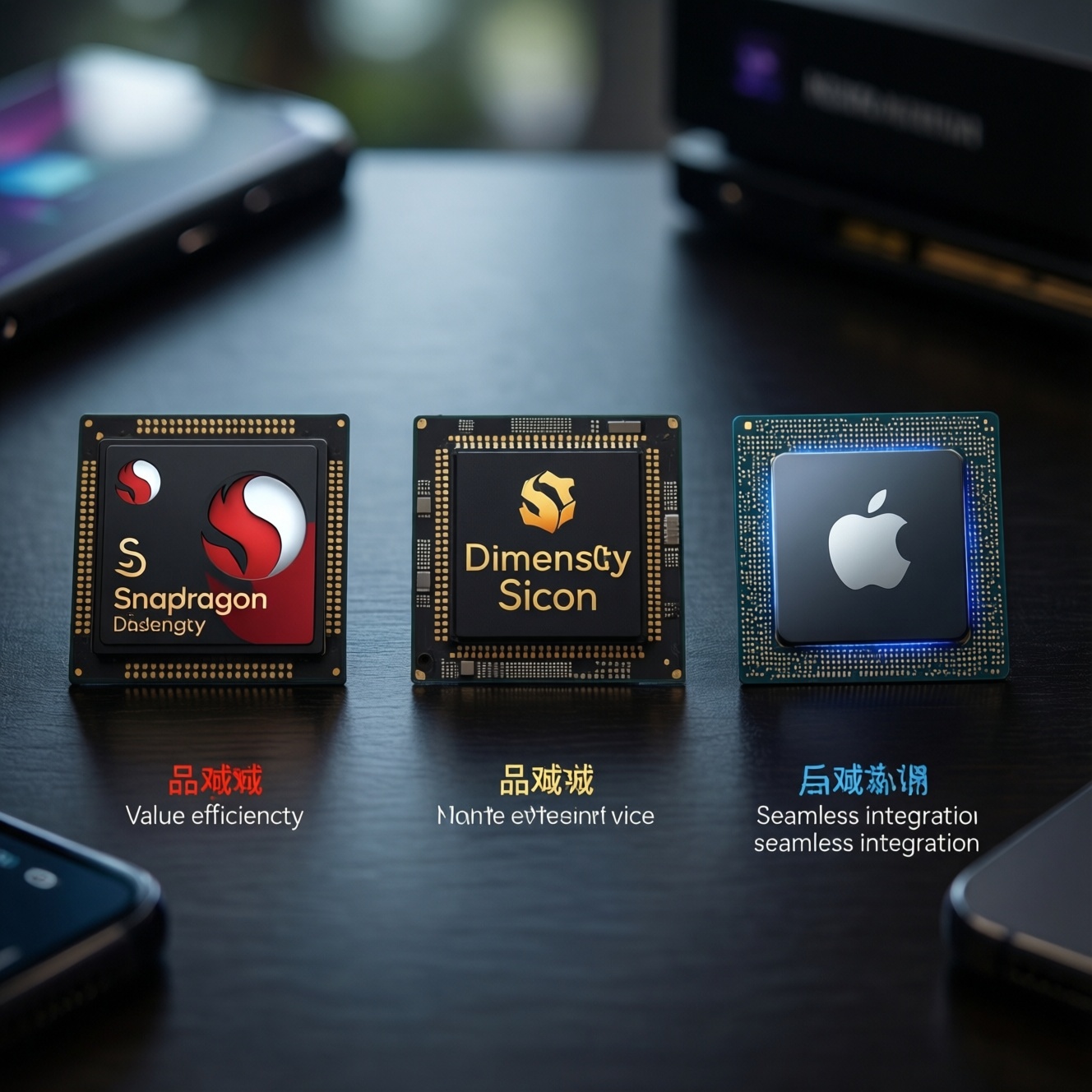
For real-world use, choose Snapdragon when you prioritize stable gaming performance, broad Android driver support, and predictable tuning; choose Dimensity when you want strong value and efficient day-to-day speed in many Android models; choose Apple Silicon when you want the tightest hardware-software integration, consistent sustained performance, and best app-level optimization within Apple's ecosystem.
Primary Performance Summaries
- Benchmarks can mislead: sustained performance, game frame-time stability, and camera pipeline tuning decide day-to-day experience more than peak scores.
- Snapdragon often wins on compatibility for demanding Android games, peripherals, and third-party camera apps.
- Dimensity frequently delivers excellent responsiveness per baht in mainstream phones, especially for mixed social, video, and light gaming.
- Apple Silicon's advantage shows in consistency: tight OS scheduling, predictable thermals, and strong on-device compute for Apple-optimized apps.
- For Thailand buyers asking "เปรียบเทียบ Snapdragon กับ Dimensity รุ่นไหนดี", the best answer depends on your persona (gamer, creator, mobile pro, value-focused).
CPU and GPU Microbenchmarks vs Real Apps
Use microbenchmarks to screen obvious winners, then validate with the apps you actually run. For a competitive gamer, GPU stability and driver behavior matter more than a single peak chart. For a content creator, media engines, ISP behavior, and export pipelines often dominate perceived speed.
Selection criteria that translate to real usage
- Sustained performance (thermal headroom): Can the device hold performance in long gaming sessions, GPS navigation, or video recording without aggressive throttling?
- Frame-time stability: "Snapdragon vs Dimensity อันไหนแรงกว่า เล่นเกมดีกว่า" is usually answered by stability and input latency, not only average FPS.
- CPU scheduling under mixed load: Messaging + camera + navigation + background sync should stay smooth without app reloads.
- GPU driver maturity and game profiles: Especially relevant for Android titles that ship per-chip optimizations.
- Media engines (encode/decode): Impacts 4K recording stability, live streaming, and battery drain during video playback.
- ISP behavior and camera pipeline: HDR consistency, shutter lag, night shots, and skin-tone tuning differ by vendor and by phone brand.
- Neural/AI acceleration availability to apps: Depends on OS APIs and OEM integration, not just raw NPU capability.
- Storage and memory tuning: App launch speed and multitasking depend heavily on OEM choices (RAM size, storage speed, memory management).
- Update and ecosystem friction: Long-term smoothness is tied to firmware quality, modem stability, and ongoing optimization.
Actionable pick: Gamers should test 2-3 of their main games for heat and stability before buying. Creators should validate camera behavior (HDR, indoor lighting) and export speed in their preferred apps rather than trusting a single benchmark bar.
Power Efficiency and Thermal Behavior in Daily Use
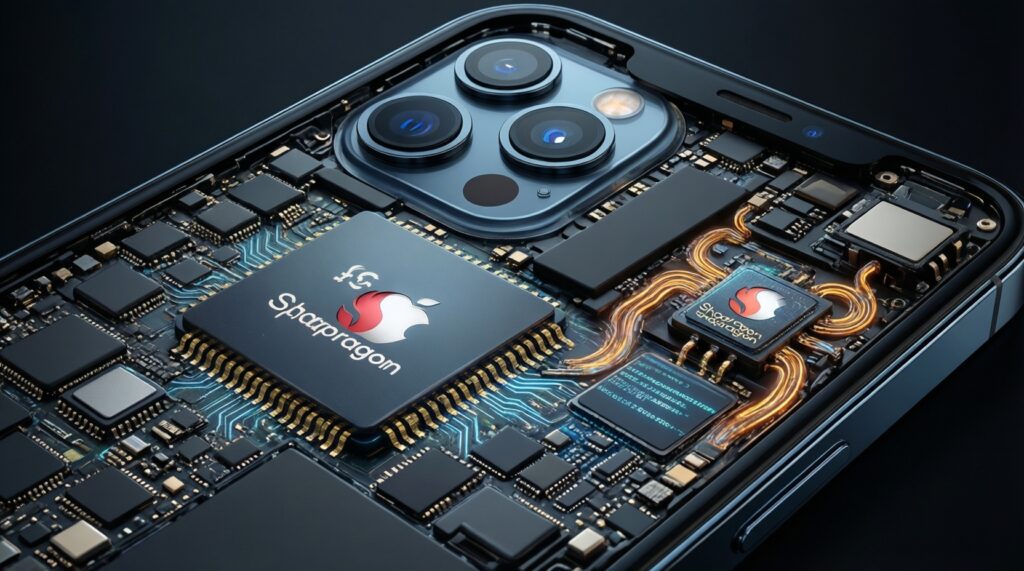
Efficiency is a product of the chip, modem behavior, OEM cooling, and firmware tuning. Apple Silicon typically benefits from deep integration across hardware and iOS/iPadOS, which helps consistency. On Android, Snapdragon devices often show predictable behavior in demanding 3D and camera workloads, while many Dimensity phones shine in balanced everyday use-especially when OEM tuning is conservative.
Actionable pick: Mobile professionals should prioritize sustained GPS + hotspot + calls stability and proven modem firmware. Value-focused users should prioritize a well-tuned midrange device with good battery management over chasing peak silicon tier.
| Variant | Who it fits | Pros | Cons | When to choose |
|---|---|---|---|---|
| Snapdragon flagship-tier (recent generation) | Competitive gamers, power users | Strong GPU behavior in many popular Android games; mature Android ecosystem support; often better third-party accessory/app compatibility | Battery and heat depend heavily on OEM cooling; some models prioritize peak boost over long runs | When you want stable high-end gaming and predictable Android compatibility, especially for long sessions |
| Snapdragon upper-mid (performance-focused midrange) | Everyday power users, light creators | Balanced efficiency; good everyday responsiveness; usually strong ISP and app support from OEMs | Not the best for sustained heavy 3D or long high-res recording compared with top tiers | When you want a dependable all-rounder Android phone without paying for the top tier |
| Dimensity flagship-tier (recent generation) | Value-seeking gamers, multitaskers | Often excellent performance-per-cost in real phones; strong multi-app responsiveness; good efficiency when tuned well | Game-specific optimization and driver behavior can vary more by title/OEM; availability depends on brand lineup | When the specific phone model is well-reviewed for gaming thermals and you want strong specs for the money |
| Dimensity upper-mid (mainstream sweet spot) | Students, daily social/video users | Very good day-to-day smoothness; typically strong battery life in well-tuned devices; attractive pricing in Thailand | May show limitations in high-end emulation, heavy video effects, or extreme frame-rate targets | When your workload is social, camera, video, light-to-medium gaming, and you want maximum value |
| Apple Silicon (iPhone/iPad class) | Creators, mobile professionals in Apple ecosystem | Consistent sustained performance; excellent OS-level optimization; strong creative app pipelines; predictable standby behavior | Less flexibility in device choices and pricing; different app/library expectations than Android | When "Apple Silicon เทียบ Snapdragon ประสิทธิภาพจริง" matters for your Apple apps: editing, productivity, and stable long-term performance |
| Apple Silicon (Mac class, for cross-device workflows) | Content creators, remote workers | Strong sustained compute for creation; efficient all-day workflows; best when paired with iPhone/iPad services | Not a phone chip; comparison is about workflow outcomes, not modem/gaming parity | When your "best chip" decision is really about a mobile + laptop workflow and you can commit to Apple tools |
AI, ML and Imaging: Observable Differences
On-device AI matters only when it's exposed cleanly to apps and tuned by the phone maker. Apple benefits from consistent OS frameworks and app targets. On Android, Snapdragon and Dimensity results vary more by brand camera tuning, model tier, and how aggressively features are marketed versus implemented.
Scenario-based recommendations
- If you rely on portrait accuracy, consistent HDR, and predictable skin tones across apps, then prioritize Apple Silicon devices or Android models with a proven camera stack and frequent camera updates.
- If you use AI features inside specific Android camera apps (beauty, night, object removal) and want broad third-party support, then lean Snapdragon on a brand known for camera optimization.
- If you want the best "good enough" results for social posting and fast processing without flagship prices, then a well-reviewed Dimensity upper-mid phone is often the pragmatic choice.
- If you do on-device transcription, translation, meeting notes, and heavy multitasking, then choose the platform where your apps run best: Apple Silicon for Apple-first productivity stacks, Snapdragon/Dimensity for Android-first toolchains.
- If you record long clips (events, travel) and care about stability over peak sharpness, then pick the device with the best thermal behavior and the most consistent sustained camera performance in reviews-not the spec sheet.
Actionable pick: Creators should test their top two camera modes (indoor HDR + night) and one export workflow. Mobile professionals should test dictation/notes plus a long video call on cellular to confirm heat and battery behavior.
Connectivity, Multimedia and I/O in Practical Scenarios
For Thailand usage, modem stability, Wi‑Fi behavior, and codec support often affect satisfaction more than raw CPU. This is where "มือถือ Snapdragon รุ่นไหนดี 2026" or "มือถือ Dimensity รุ่นไหนดี 2026" becomes less about chip logos and more about the exact phone's modem firmware, bands, and vendor updates.
- List your primary network use: dual SIM, hotspot, travel roaming, or rural coverage; prioritize proven modem stability in local reviews.
- Confirm Wi‑Fi behavior for your environment (home router, condo congestion, office mesh) and check for reports of drops or high standby drain.
- Choose multimedia priorities: long video playback, live streaming, or Bluetooth earbuds stability; pick the device with the least reported codec/latency issues.
- Check storage tier and RAM configuration for the exact model you'll buy; the same chip can feel different across SKUs.
- Validate I/O expectations: USB behavior (display out, file transfer), accessory compatibility, and car connectivity if you rely on them.
- Match your game targets: if you want stable high refresh with fewer surprises across patches, lean toward chip/platform combos with stronger game-profile support.
Actionable pick: Gamers should prioritize stable Wi‑Fi/cellular plus thermal design as much as GPU branding. Mobile professionals should prioritize call quality, hotspot stability, and firmware update cadence.
Platform Integration: OS Support, Drivers and App Ecosystem
Most bad purchases come from ignoring integration: the chip is capable, but the phone's firmware, drivers, and update policy decide whether you enjoy that capability for years. Apple Silicon benefits from controlled hardware and consistent OS rollouts. Android variance is wider, so the specific OEM matters as much as Snapdragon vs Dimensity.
Common buying mistakes to avoid
- Choosing based on a single benchmark screenshot instead of sustained workload behavior (gaming, camera, navigation).
- Ignoring OEM update policy and regional firmware quality; stability improvements often arrive via updates.
- Assuming "flagship chip" guarantees flagship cooling; thin designs can throttle earlier than expected.
- Overvaluing AI feature marketing without checking whether your apps can actually use the acceleration reliably.
- Not testing your critical apps (banking, work profiles, MDM, game anti-cheat, peripherals) on the exact OS version.
- Forgetting that storage/RAM tier can bottleneck the experience more than the chip label in midrange devices.
- Buying for camera specs alone (megapixels, sensors) while ignoring ISP tuning, shutter lag, and video stability.
- Assuming accessory compatibility is identical across Android models; USB, Bluetooth stacks, and codecs can vary.
Actionable pick: Creators should buy the phone model with the best camera firmware track record, not the most aggressive spec sheet. Value-focused users should pick the best-balanced device from a brand with reliable updates in Thailand.
Persona-Based Comparisons: Gamers, Content Creators, Mobile Professionals
Best fit tends to look like this: for competitive Android gaming and broad compatibility, a well-cooled Snapdragon flagship-tier phone is usually the safest bet; for value and smooth everyday speed, many Dimensity upper-mid or flagship-tier devices are excellent if reviews confirm stable thermals; for creators and mobile pros already on Apple services, Apple Silicon delivers the most consistent end-to-end performance and workflow reliability.
Practical Clarifications for Choosing a Chip
Is Snapdragon always faster than Dimensity?
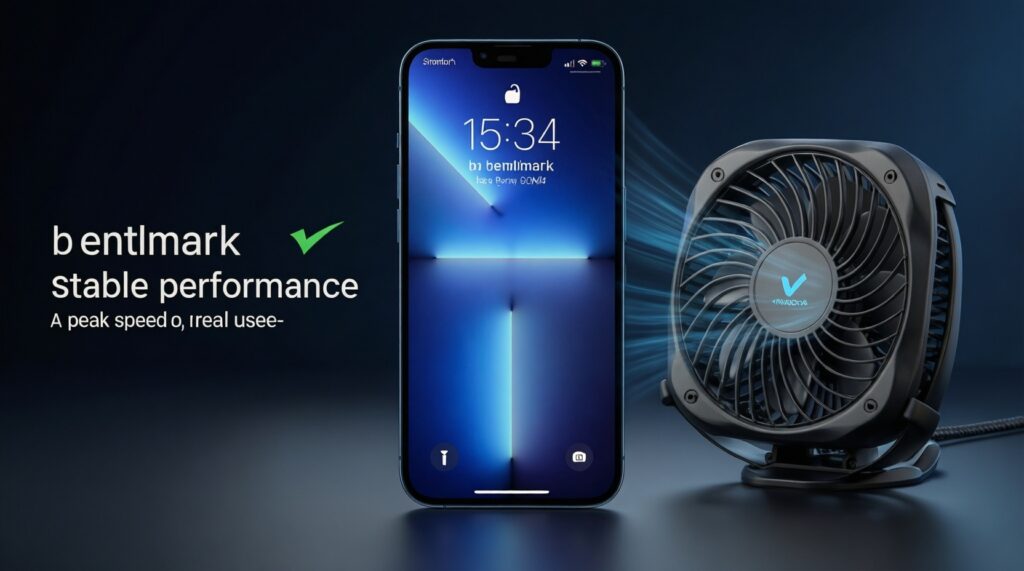
No. It depends on the exact generation and, more importantly, the phone's cooling and firmware tuning; in real use, stability can beat peak speed.
For "Snapdragon vs Dimensity อันไหนแรงกว่า เล่นเกมดีกว่า", what should I check first?
Check sustained gaming performance and frame-time stability in reviews of the exact phone model, plus whether your main games are well-optimized for that chipset.
Does Apple Silicon automatically beat Android chips in real performance?
"Apple Silicon เทียบ Snapdragon ประสิทธิภาพจริง" is often about consistency and app optimization. If your apps are Apple-optimized, Apple feels faster; if you rely on Android-specific tools, the advantage may disappear.
What matters more for battery life: chip brand or phone design?
Phone design and tuning usually matter more: display, battery size, modem behavior, and OEM power management can outweigh the chip's theoretical efficiency.
How do I decide if I'm choosing between "มือถือ Snapdragon รุ่นไหนดี 2026" models?
Pick based on the device's cooling design, update policy, and camera/modem stability in local usage reviews, then validate your top apps and games.
How do I decide if I'm choosing between "มือถือ Dimensity รุ่นไหนดี 2026" models?
Focus on the specific model's firmware maturity, thermal behavior under load, and real camera/video stability, because Dimensity experiences can vary more across brands.
What's the simplest rule if I don't want to overthink specs?
Buy the best-reviewed phone for your top two tasks (gaming or camera/work), not the best-looking benchmark, and prioritize proven updates and thermals.