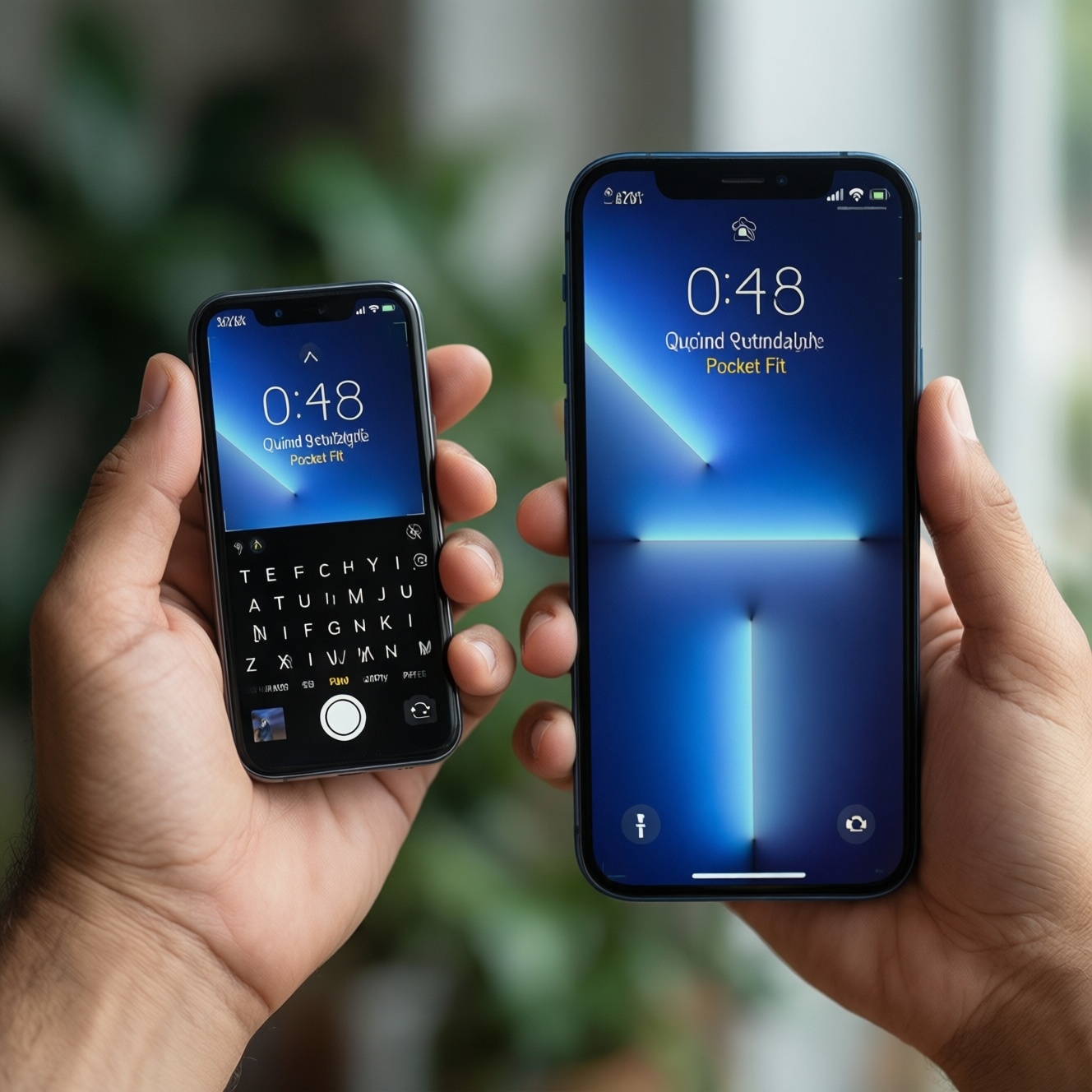
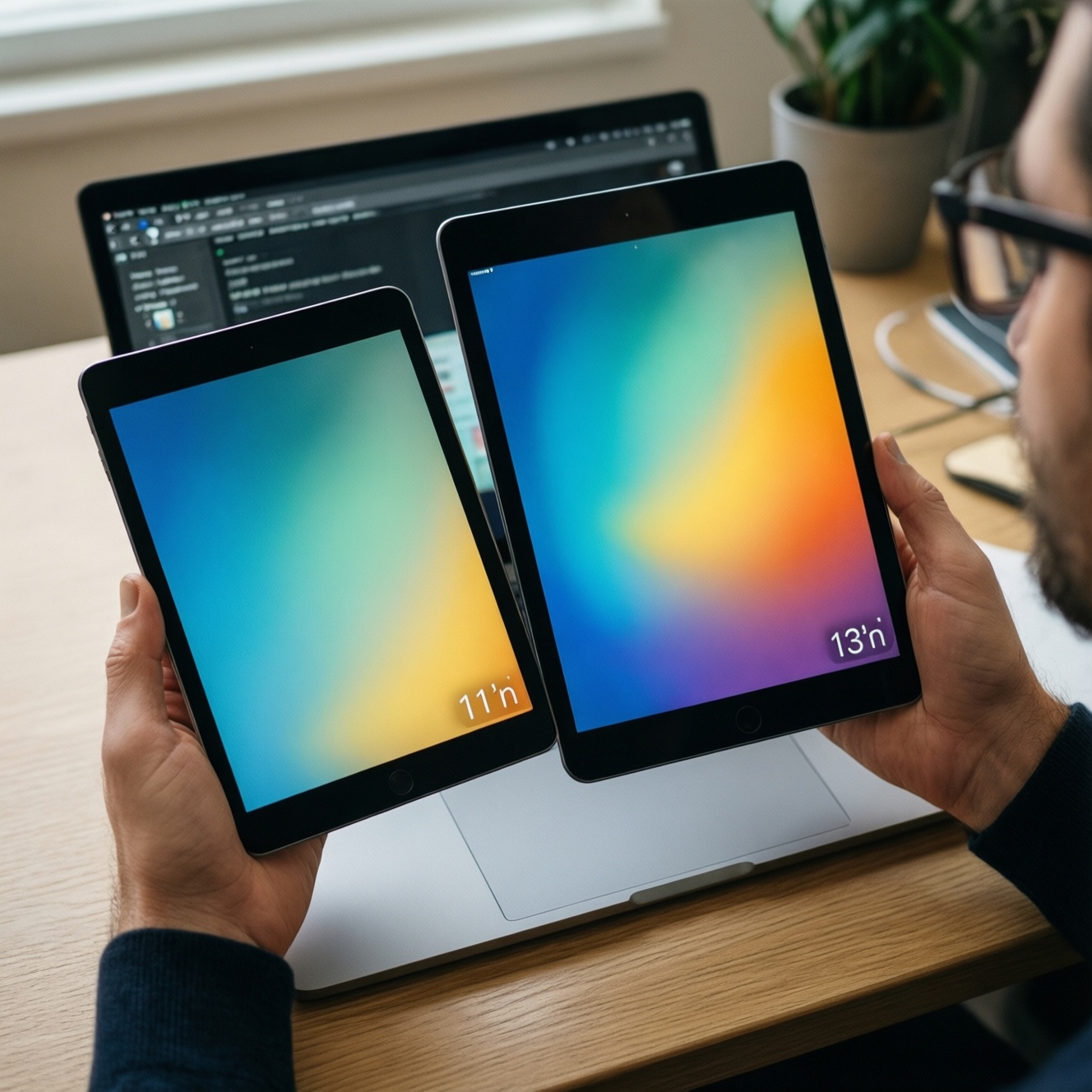
An 11-inch tablet is usually the better pick if you commute, read, take notes, and want a device that fits easily in smaller bags and works well handheld. A 13-inch tablet is usually better for split-screen work, drawing on a larger canvas, and laptop-like typing. The best choice depends on your main tasks and carry habits.
Bottom-line guide: which screen size fits your workflow
- Pick 11-inch if you prioritize one-hand use, quick note-taking, and daily carry convenience.
- Pick 13-inch if you frequently multi-task (two apps side-by-side) or do design/illustration where canvas space matters.
- Choose 11-inch for tablet-first usage; choose 13-inch for laptop-replacement usage with keyboard and stand.
- If you're searching แท็บเล็ต 11 นิ้ว พกพาง่าย แบตอึด รุ่นแนะนำ, your priorities likely align with 11-inch plus efficient chipset and a simpler accessory kit.
- If you're searching ซื้อแท็บเล็ตจอใหญ่ 13 นิ้ว ราคาดี, budget for the whole setup (keyboard/stand/pen), not only the tablet.
Performance and ergonomics: matching tasks to size
- Primary posture: mostly handheld (leans 11) vs mostly desk/stand (leans 13).
- Split-screen tolerance: if you rely on two panes for docs + chat/email, 13 stays comfortable longer.
- Text density vs readability: 11 often needs more zooming; 13 reduces zooming and scrolling for many workflows.
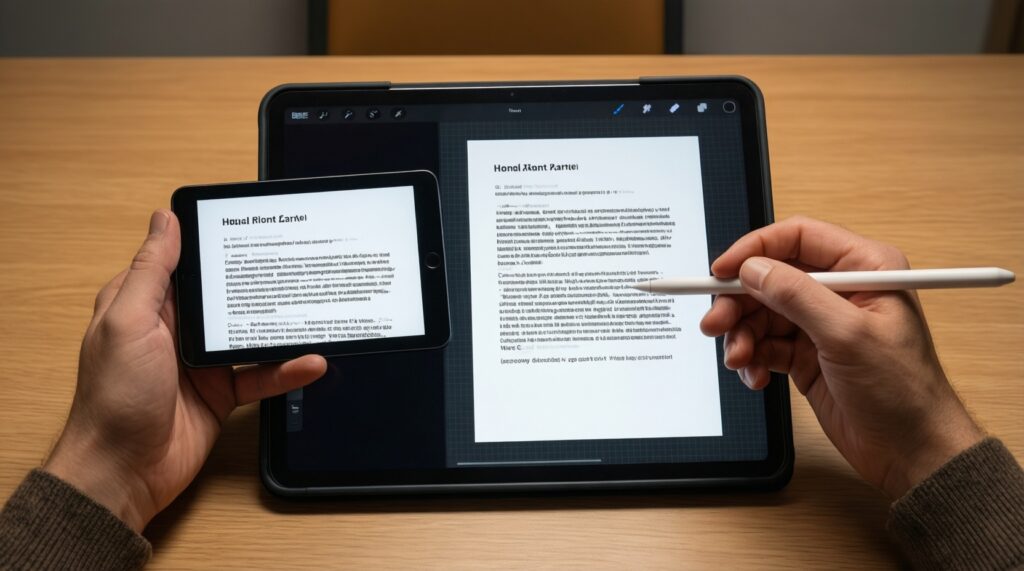
- Pen ergonomics: drawing long sessions tends to feel less cramped on 13; quick annotation and note capture often feels snappier on 11.
- Typing intent: short replies (11) vs longer writing sessions with keyboard (13).
- Meeting workflow: moving room-to-room and standing note-taking favors 11; camera on plus notes plus agenda on a stand favors 13.
- Hand fatigue: larger devices generally become tiring faster when held for long stretches.
- Thermal comfort: sustained heavy tasks can feel warmer; a larger chassis can sometimes feel less concentrated in the hand, but plan for desk use if you render/export often.
Recommendation: If your day involves frequent handheld use and short bursts of work, default to 11-inch. If you sit at a desk and want fewer UI compromises in split-screen, default to 13-inch.
Display quality, aspect ratio and creative work impact
For creatives and power readers, 11 vs 13 is less about raw quality and more about usable workspace, aspect ratio, and how the OS scales UI in split-screen. Below are practical variants you'll actually encounter when comparing models, including when people ask เปรียบเทียบแท็บเล็ต 11 นิ้ว กับ 13 นิ้ว.
| Variant | Who it fits | Pros | Cons | When to choose |
|---|---|---|---|---|
| 11-inch, productivity-oriented aspect (wider) | Students, commuters, email + docs | Feels snappy for reading and quick edits; better for landscape video and simple two-app workflows | Split-screen can feel tight for complex apps; drawing canvas is smaller | When you want an everyday carry device that still supports occasional multitasking |
| 11-inch, page-oriented aspect (taller) | Heavy readers, PDF markup, note-takers | Comfortable portrait reading; annotations feel natural | Wider app layouts can feel narrower in landscape; some keyboards feel cramped | When your day is mostly reading, highlighting, and handwritten notes |
| 13-inch, productivity-oriented aspect (wider) | Hybrid workers, spreadsheet/doc users | More effective split-screen; less zoom/scroll; better mini-laptop feel with keyboard | Less friendly handheld; bigger bag footprint; accessory setup matters more | When you routinely work in two panes (doc + reference, mail + calendar) |
| 13-inch, page-oriented aspect (taller) | Illustrators, designers, long-form note-taking | Larger canvas; more natural A4-like reading/markup feel; easier precision work | Bulkier for travel; desk/stand is almost mandatory for long sessions | When creative work or dense PDFs are central to your workflow |
| 11-inch vs 13-inch with similar high-end panels | Buyers comparing premium tiers | Panel tech may be comparable; the real gain is workspace on 13, mobility on 11 | You can overpay chasing panel specs while ignoring ergonomics | When you've narrowed to similar-class models and need to decide by usage style |
Quick two-column comparison (11 vs 13) for day-to-day impact
| 11-inch | 13-inch |
|---|---|
| Handheld comfort: easier for long reading and casual browsing | Handheld comfort: better on a stand; handheld sessions fatigue sooner |
| Split-screen: workable, but more compromises (more zooming, tighter UI) | Split-screen: consistently usable for real multitasking |
| Drawing/markup: great for notes and quick sketches | Drawing/markup: better for detailed illustration and larger canvases |
| Carry: fits more bags; easier on commutes | Carry: needs more space; benefits from a sleeve/rigid case |
| Keyboard use: fine for short writing; compact layouts vary by model | Keyboard use: more laptop-like typing posture and key spacing (varies) |
| Typical buyer intent: แท็บเล็ตจอ 11 นิ้ว รุ่นไหนดี often means portable + flexible | Typical buyer intent: แท็บเล็ตจอ 13 นิ้ว รุ่นไหนดี often means productivity + canvas |
Recommendation: If your creative work is frequent and serious, prioritize 13-inch. If creativity is occasional and you value comfort everywhere, prioritize 11-inch.
Portability metrics: weight, footprint and carry solutions
Instead of chasing spec-sheet grams, decide based on how you actually move through your day and what you carry with the tablet (charger, keyboard, stand, pen).
- If you commute on BTS/MRT and use the tablet standing, then 11-inch is usually the safer choice for grip, balance, and quick one-hand interactions.
- If you're a hybrid worker moving between home and office, then 13-inch can work well if you commit to a sleeve and a stable keyboard/stand setup.
- If you travel with a small sling or compact backpack, then 11-inch is easier to fit without bending or pressing the screen against other items.
- If you mainly use it at cafés or coworking spaces, then 13-inch feels closer to a laptop replacement, but plan for table space and a sturdier stand angle.
- If you are a creative pro carrying pen + keyboard + external storage, then 13-inch often reduces workflow friction, but your portable kit becomes a deliberate loadout.
Scenario examples for Thailand-based users
- Commuter student: 11-inch + pen + slim folio; prioritize quick wake, reliable note apps, and comfortable portrait reading.
- Hybrid worker: 13-inch + keyboard + stand; prioritize split-screen, windowing features, and a bag that protects corners.
- Creative pro: 13-inch for canvas; consider an 11-inch only if you already have a desktop and want a lightweight sketch/annotation companion.
Recommendation: For true grab-and-go, 11-inch wins. For I carry a work kit, 13-inch is usually worth it.
Battery, heat and sustained-use implications
- List your top 3 sustained tasks (video calls, drawing, gaming, exporting, note-taking) and mark which run longer than an hour.
- If you often run heavy apps + brightness high, assume you'll benefit from a workflow that allows breaks (stand/desk use), especially on 13-inch.
- If your priority is all-day out without thinking, favor 11-inch setups with fewer always-on accessories (keyboard backlight, hubs).
- If you will use a keyboard case daily, treat it as part of battery planning (you'll type more, multitask more, and keep the screen active longer).
- Check charging logistics: where will you top up at desk, in transit, or rarely? More in-transit points to 11-inch simplicity.
- If you export/render often, prioritize models with proven sustained performance and plan to do those tasks on a surface, not handheld.
Recommendation: For long, mixed days away from outlets, keep the setup lean (often 11-inch). For desk-heavy sustained work, 13-inch is fine when paired with stable thermals and a stand.
Peripherals and input options: keyboards, pens and stands
- Buying 13-inch without a real stand plan: the larger screen shines on a stable angle; without it, neck/shoulder strain increases.
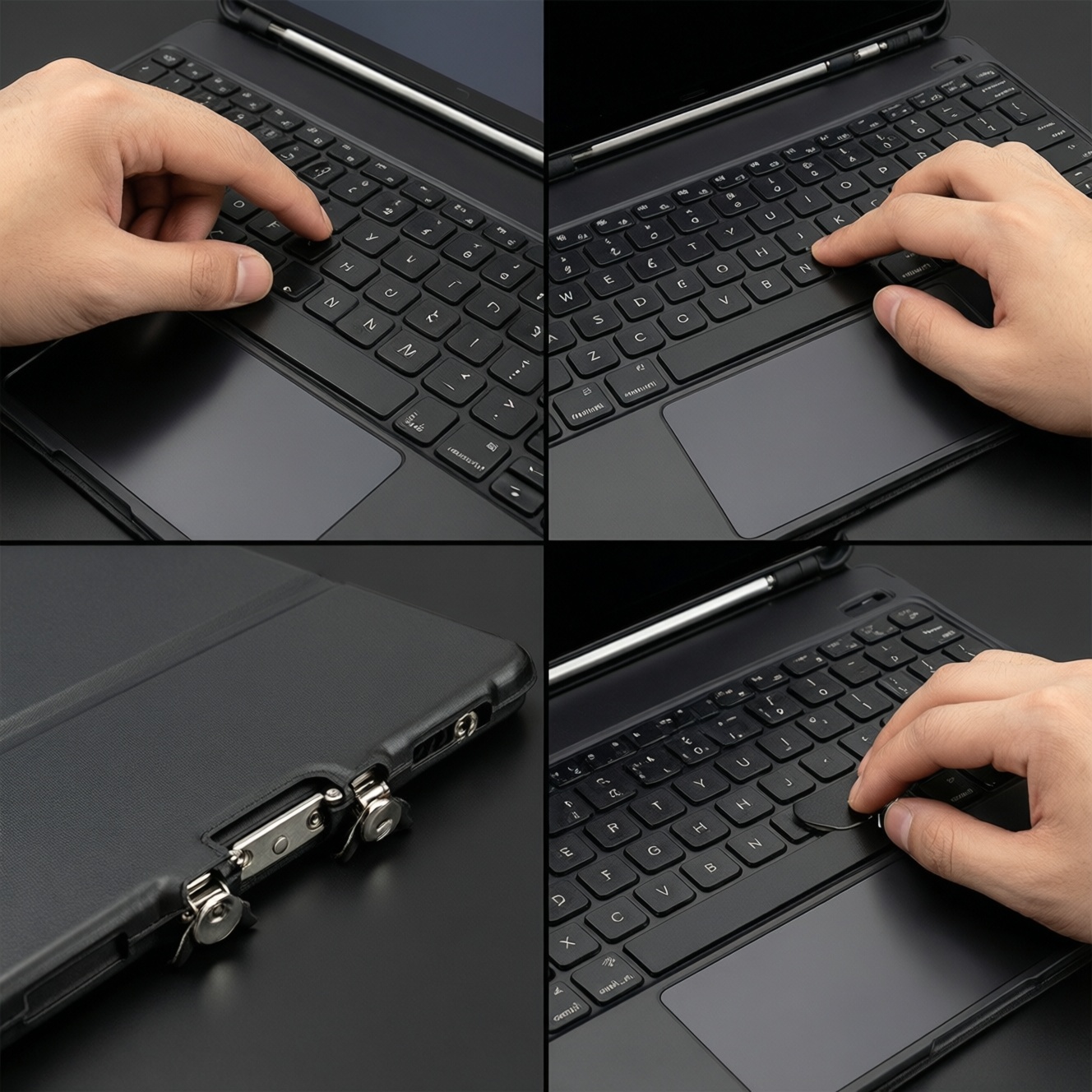
- Assuming any keyboard case feels laptop-like: trackpad quality, hinge stability, and key pitch vary widely; try before you buy if possible.
- Overprioritizing pen features over ergonomics: on 11-inch, palm placement and UI density can be the limiting factor, not pen specs.
- Ignoring where the pen attaches/charges: poor attachment increases loss risk during commuting (a common 11-inch use case).
- Underestimating accessory bulk: a 13-inch tablet + keyboard + charger kit often becomes closer to ultrabook carry expectations.
- Skipping a sleeve/rigid case on 13-inch: larger panels are less forgiving to bag pressure and corner bumps.
- Buying hubs for a tablet-first workflow: if you rarely connect external displays or storage, choose simplicity over dongle life.
- Not matching stand height to video calls: 13-inch improves framing on a stand; 11-inch often needs a small riser to avoid low-angle calls.
Compact decision-tree: pick 11 or 13 quickly
| User profile | Choose 11-inch when... | Choose 13-inch when... |
|---|---|---|
| Commuter / campus carry | You use it handheld often and want easy bag fit | You still want a large screen, and you always carry a sleeve + stand |
| Hybrid worker | You mostly handle email, light docs, and meetings | You regularly do split-screen docs, planning, spreadsheets |
| Creative (drawing/design) | You sketch, annotate, or do occasional edits | You draw for hours and want a bigger canvas and fewer UI compromises |
| Media + reading focus | You want comfortable handheld reading in portrait | You watch/edit media at a desk and want more screen presence |
| Value-focused buyer | You want lower total spend by keeping accessories minimal | You accept higher setup cost to replace more laptop tasks |
- If you want a tablet that feels natural in the hand → choose 11-inch.
- If you want a tablet that behaves like a workspace → choose 13-inch.
- If your search is แท็บเล็ตจอ 11 นิ้ว รุ่นไหนดี → shortlist 11-inch models with a strong pen + note ecosystem and efficient performance.
- If your search is แท็บเล็ตจอ 13 นิ้ว รุ่นไหนดี → shortlist 13-inch models with the best multitasking UI and the most stable keyboard/stand options.
- If your goal is ซื้อแท็บเล็ตจอใหญ่ 13 นิ้ว ราคาดี → compare the bundle cost (tablet + keyboard + pen) before deciding it is good value.
Recommendation: Accessories decide whether 13-inch feels amazing or annoying. If you will not commit to the setup, 11-inch is the safer long-term experience.
Cost, upgradeability and long-term value by size
For a lightweight everyday device, 11-inch is typically the best match for commuters and students who value carry comfort and fast pick-up-and-use moments. For a device that replaces more laptop time, 13-inch is typically the best match for hybrid workers and creatives who live in split-screen, longer documents, and larger canvases, especially when you budget for the right keyboard and stand.
Typical buyer scenarios with concise answers
I commute daily in Bangkok. Which size is less annoying to carry?
Usually 11-inch. It's easier to use handheld on transit and fits more bags without turning your carry into a work kit.
I do lots of split-screen (Docs + Chat/Email). Should I jump to 13-inch?
Yes, 13-inch is typically more comfortable for sustained split-screen. You'll zoom and scroll less, and the UI feels less cramped.
Is 13-inch automatically better for drawing with a pen?
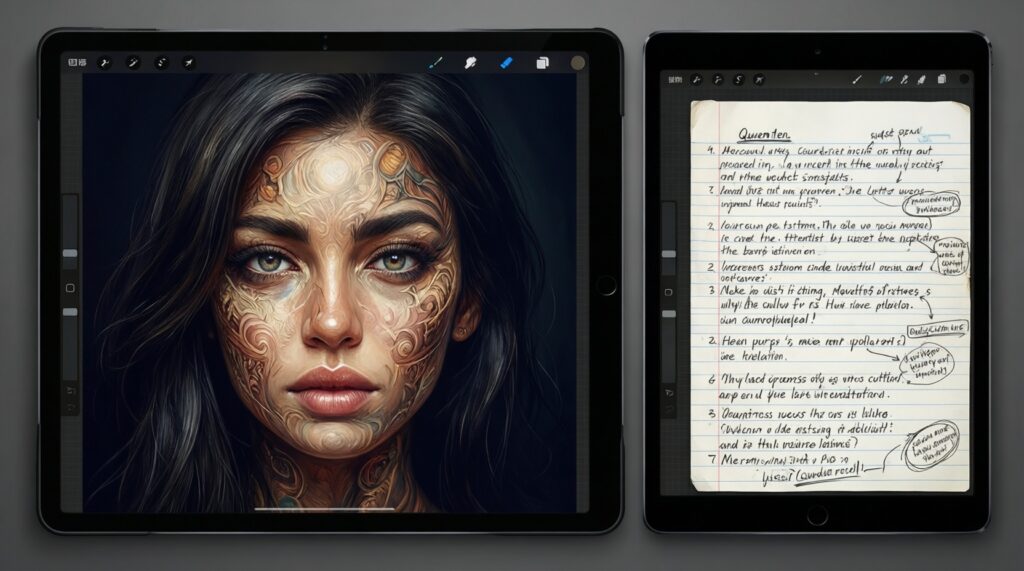
Not automatically, but it's often better for long sessions and detailed work because the canvas is larger. If you mainly annotate and take notes, 11-inch can be more convenient.
What does เปรียบเทียบแท็บเล็ต 11 นิ้ว กับ 13 นิ้ว come down to in real life?
It mostly comes down to posture and carry: 11-inch favors handheld flexibility, 13-inch favors desk/stand productivity. Specs matter, but ergonomics usually decide satisfaction.
If I'm searching แท็บเล็ต 11 นิ้ว พกพาง่าย แบตอึด รุ่นแนะนำ, what should I prioritize?
Prioritize efficient performance, a good standby/wake experience, and a pen/folio that doesn't add bulk. The right 11-inch feels effortless to carry and use.
If I'm searching ซื้อแท็บเล็ตจอใหญ่ 13 นิ้ว ราคาดี, where do people misjudge value?
They compare only tablet prices and ignore accessory costs and bulk. Value is best judged by total setup cost and how much laptop time it realistically replaces.