If your goal is to pick the best TWS for sound, call mic, and noise cancelling in crowded places, prioritize (1) a tuning you actually like, (2) proven voice pickup with strong noise suppression, and (3) ANC that stays stable on BTS/MRT and in cafés. Then confirm fit, Bluetooth stability, and latency for your main device.
Snapshot: Essential Performance Metrics
- Tuning fit: bass level, vocal presence, treble smoothness, and whether EQ can be saved on the earbuds.
- Call pickup: how well your voice stays forward when traffic, fans, and chatter rise.
- ANC behavior: consistency during head turns, walking wind, and transit rumble (not just "strong on paper").
- Latency control: presence of a low-latency mode and whether it actually works across your phone/PC apps.
- Connection stability: dropouts in malls/BTS platforms and how fast reconnection is after pocketing.
- Comfort + seal: passive isolation from tips, pressure from ANC, and long-wear hotspots.
Sound Signature and Measured Frequency Response
When people ask "หูฟัง TWS เสียงดี" they usually mean one of three tunings: balanced, bass-enhanced, or vocal-forward. Even without lab graphs in front of you, you can choose more reliably by checking these selection criteria (and verifying with a few repeatable test tracks you know well).
- Sub-bass vs mid-bass balance: sub-bass gives depth; too much mid-bass masks vocals and call-side tone.
- Vocal presence (upper mids): crucial for podcasts, meetings, and Thai consonant clarity; too much gets shouty.
- Treble smoothness: cymbals and "S" sounds should be crisp without piercing; harsh treble increases fatigue.
- Channel balance: left/right mismatch makes vocals drift; it also hurts spatial cues in games.
- Distortion behavior (THD): listen for bass "fuzz" at your normal loudness; distortion is often worse with max ANC + high volume.
- EQ quality: a multi-band EQ with a saved preset is more useful than a few vague "Bass/Clarity" toggles.
- Codec support and implementation: codec logos matter less than stable decoding; prioritize reliability over "spec bragging."
- Volume steps: fine steps help commuting; big jumps make you over-shoot safe loudness.
Persona verdict: For a commuter, a slightly warm tuning reduces fatigue under ANC. For a remote worker, pick vocal-forward or balanced so voices stay intelligible at low volume. For a gamer, avoid overly boosted bass that can blur footsteps and positional cues.
Microphone Testing: Call Clarity in Real-World Scenarios
If your priority is "หูฟัง TWS ไมค์ชัด คุยโทรศัพท์ดี", judge mics in three environments: (1) quiet room, (2) fan/AC noise, (3) street or café chatter. The biggest differentiator is not mic count alone, but how the DSP separates your voice from broadband noise and wind.
| Variant | Who it suits | Pros | Cons | When to choose |
|---|---|---|---|---|
| Stem-style earbuds with beamforming + strong uplink noise suppression | Remote worker, frequent callers | Voice tends to stay forward; consistent pickup when you turn your head | Can sound a bit "processed" in aggressive modes; may clip if you speak very loudly | Daily calls on Line/Teams in cafés or open-plan offices |
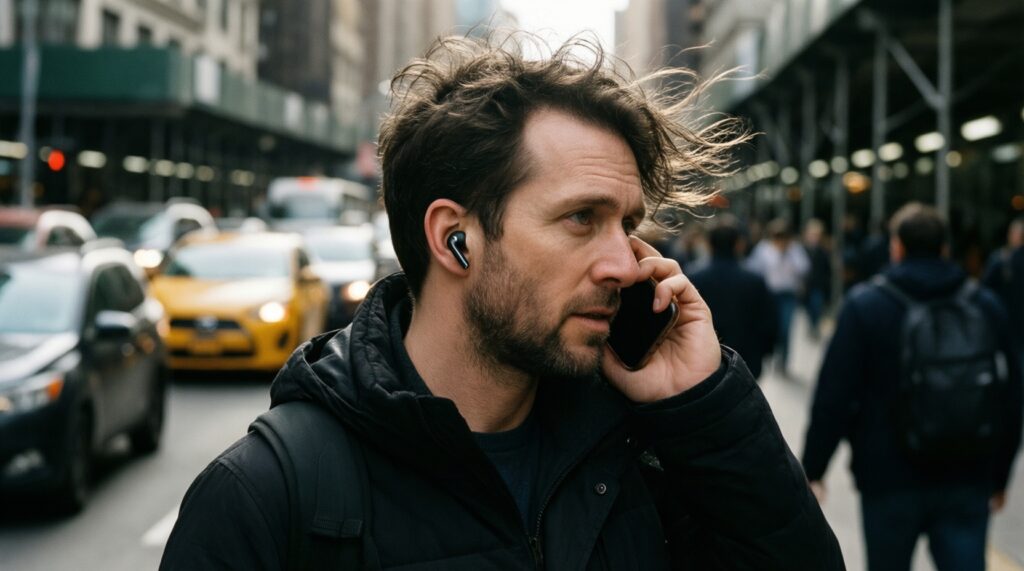
| In-ear (no stem) with multi-mic array + AI noise reduction | Commuter, mixed use | Good balance of call clarity and compact fit; often better wind handling than older designs | Performance varies heavily by brand tuning; can under-pick quiet voices | Calls while walking or riding BTS/MRT, but you also care about comfort |
| Earbuds with voice sensor (bone-conduction / VPU-type assistance) | Heavy caller in very noisy streets | Helps keep voice intelligible when external mics get overwhelmed | May sound less natural; effectiveness depends on fit and jaw contact | Regular calls near traffic, markets, or construction noise |
| Business-focused TWS with sidetone tuning + stable multipoint | Remote worker, laptop + phone switching | Fewer missed words because you hear yourself; smoother device switching for meetings | ANC and music tuning can be secondary priorities | Back-to-back meetings, frequent device switching, minimal fuss |
| Gaming-oriented TWS (dongle/low-latency mode) with basic call DSP | Gamer who sometimes takes calls | Low delay for PC/console setups (when the mode works as intended) | Mic can struggle in wind/crowds compared with call-first models | Gameplay is primary; calls are occasional and usually indoors |
| Budget TWS with single-mic or weak wind reduction | Light caller, quiet environments | Often good value for music at home | Voice drops in traffic/fans; background dominates quickly | Mostly indoor calls; you accept limitations to save budget |
- Field test script (repeatable): say the same two sentences in Thai and English, then read numbers slowly; check if consonants and digits survive noise suppression.
- Deal-breaker check: if the other side says your voice "pumps" or "underwater," the DSP is over-suppressing.
Persona verdict: For a remote worker, choose call-first tuning (beamforming/voice sensor) even if music is merely "good." For a commuter, prioritize wind control and stable pickup when walking. For a gamer, only pick gaming TWS if the low-latency path matters more than noisy-street calls.
Active Noise Cancellation: Performance in Crowds and Transit
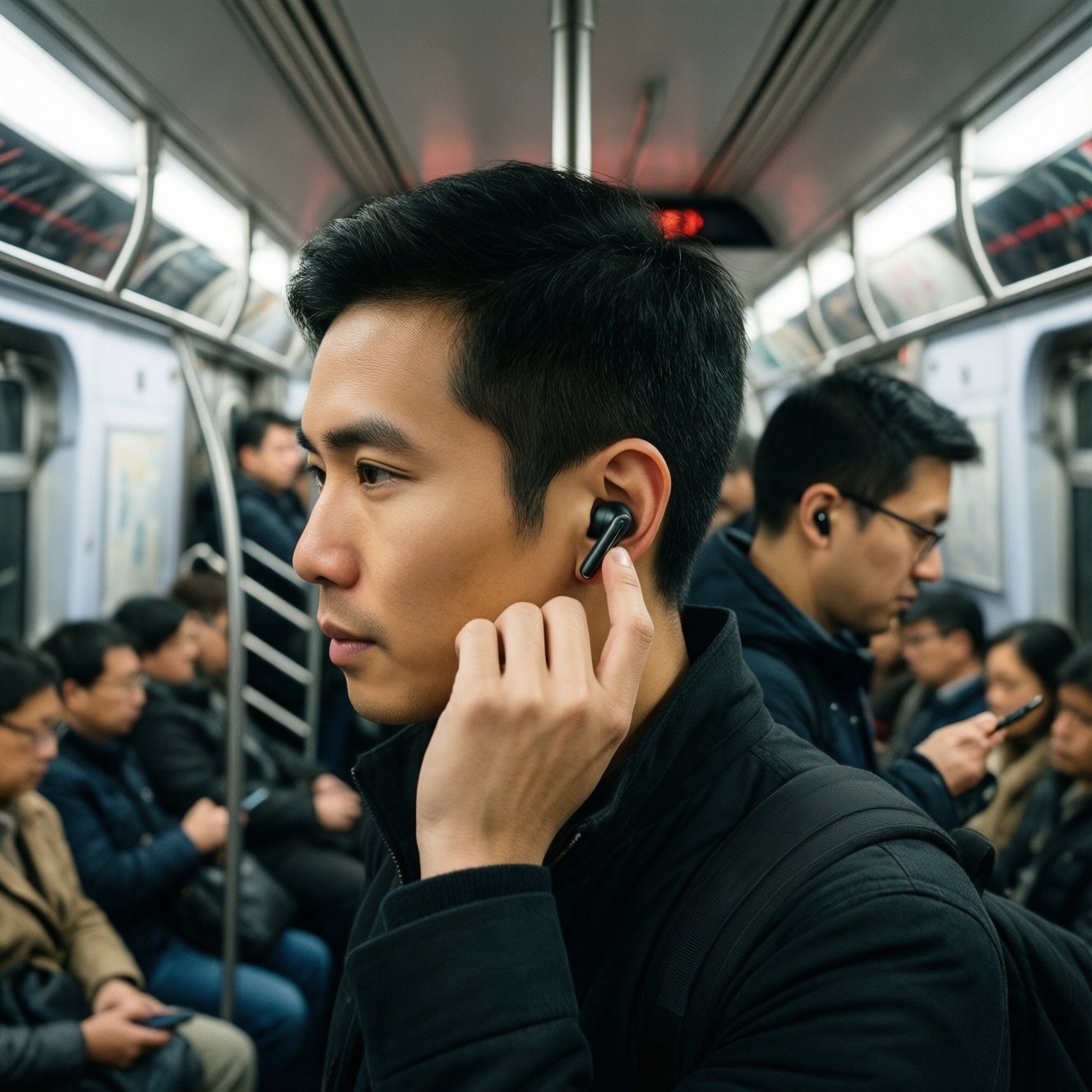
For "หูฟัง TWS ตัดเสียงรบกวน ANC" in Thailand, the practical goal is reducing low-frequency rumble (BTS/MRT, buses) and smoothing mid noise (café chatter) without creating pressure, hiss, or instability when you move.
- If you commute on BTS/MRT daily, then prioritize ANC stability against low-frequency rumble and seal quality; weak seal makes even strong ANC feel inconsistent.
- If you work from cafés, then choose ANC that targets mid-band chatter plus a transparency mode that keeps voices natural when ordering.
- If you often walk outdoors, then pick models with strong wind noise reduction and an ANC mode that doesn't "thump" with each gust.
- If you're sensitive to ear pressure, then select earbuds with multiple ANC levels (or adaptive ANC you can limit) and rely more on passive isolation via tips.
- If your calls happen in noisy places, then avoid using the most aggressive ANC setting during calls when it causes sidetone distortion; use moderate ANC + better tips instead.
Persona verdict: For a commuter, ANC consistency + comfort beats maximum strength. For a remote worker, prioritize a natural transparency mode alongside ANC. For a gamer, ANC is secondary unless you play in loud environments.
Latency, Bluetooth Stability and Battery Endurance
When deciding "ซื้อหูฟัง TWS" for daily use, latency and stability usually cause more regret than raw sound. Use this quick selection algorithm before you commit.
- List your primary device(s): Android phone brand/model, iPhone, Windows laptop, iPad, handheld console; shortlist earbuds known to behave well on that ecosystem.
- Confirm whether a low-latency mode exists and whether it applies to your use (video apps, games, PC dongle mode, etc.).
- Check for multipoint if you switch phone/laptop often; if you don't, avoid paying for it and prioritize mic/ANC instead.
- Prefer earbuds with independent bud connection (either bud can be used alone) if you take many short calls.
- Assess battery the practical way: choose models that can handle your longest continuous block (commute + work + calls) without "battery anxiety," not just a big spec claim.
- Verify charging-case convenience: quick top-ups, predictable battery reporting, and easy-to-clean contacts.
- Before buying, read user feedback specifically about dropouts in crowded RF areas (malls, transit platforms), not only "sounds great."
Persona verdict: For a gamer, prioritize a proven low-latency path (mode or dongle) and stable connection. For a commuter, stability in crowded areas and fast reconnection matter most. For a remote worker, multipoint and reliable switching reduce meeting friction.
Fit, Passive Isolation and Long-Wear Comfort
Fit is the hidden variable: it affects bass, ANC, mic wind noise, and whether you'll actually wear the earbuds long enough to benefit. Avoid these common buying mistakes.
- Choosing based on driver size or brand alone while ignoring whether the nozzle shape matches your ear canal.
- Using the wrong ear-tip size: too small leaks bass and breaks ANC; too large causes pain and "pressure."
- Assuming ANC can fix a poor seal; it can't-leaks create unstable cancellation and thin sound.
- Ignoring how the earbuds behave when you chew/talk; jaw movement can break seal and shift tonal balance.
- Buying glossy shells that become slippery with sweat in Thailand's climate; stability matters more than looks.
- Over-prioritizing ultra-light buds if they protrude and catch on pillows/helmets-fit geometry matters more than grams.
- Skipping tip materials: some users do better with foam-like tips for passive isolation, others need silicone to reduce irritation.
- Not testing one-ear use: some models lose tonal balance or ANC/transparency features when only one bud is used.
- For calls, forgetting that a looser fit increases wind noise at the mic ports and makes DSP work harder.
Persona verdict: For a commuter, prioritize seal stability and sweat-resistance. For a remote worker, comfort over hours beats marginal ANC gains. For a gamer, ensure the fit stays stable with head movement and doesn't create hotspots under a headset/helmet.
Persona-Based Comparison: Which TWS Suits Which User
If you're deciding "หูฟัง TWS รุ่นไหนดี" without locking to a specific brand, the most reliable "best" is role-based: a commuter tends to do best with stable ANC + secure seal + dependable connection; a remote worker should lean toward call-first mic processing and multipoint convenience; a gamer is better served by proven low-latency behavior even if ANC and mic are merely adequate.
Practical Questions Buyers Ask
How can I quickly tell if a TWS mic is good before buying?
Look for real-world samples recorded in traffic or cafés, not only quiet-room tests. Prioritize models where your voice stays consistent when the reviewer turns their head and when wind is present.
Does stronger ANC always mean better for Bangkok commuting?
No. ANC that is stable and comfortable during movement usually feels better than "maximum" ANC that creates pressure or fluctuates when the seal shifts on BTS/MRT.
Is stem-style automatically better for calls?
Often, but not guaranteed. Stem designs can position microphones favorably, yet the call DSP and wind handling make a bigger difference than shape alone.
Will buying higher-end codecs guarantee better sound?
Not by itself. A well-tuned driver with stable Bluetooth typically beats a fancy codec implementation that drops out or sounds inconsistent across apps.
What matters more for perceived bass: driver size or fit?
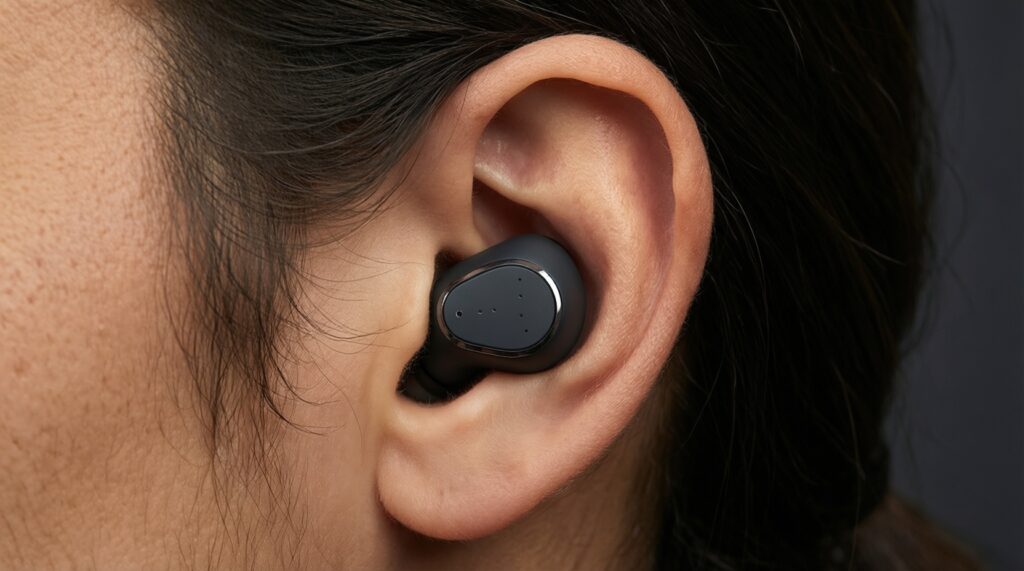
Fit. A small driver with an excellent seal can deliver fuller bass than a large driver with leaks, and the seal also improves ANC.
Should I prioritize multipoint if I only use a phone?
No. If you rarely switch devices, focus on mic performance, comfort, and stability instead; multipoint is most valuable for laptop + phone workflows.