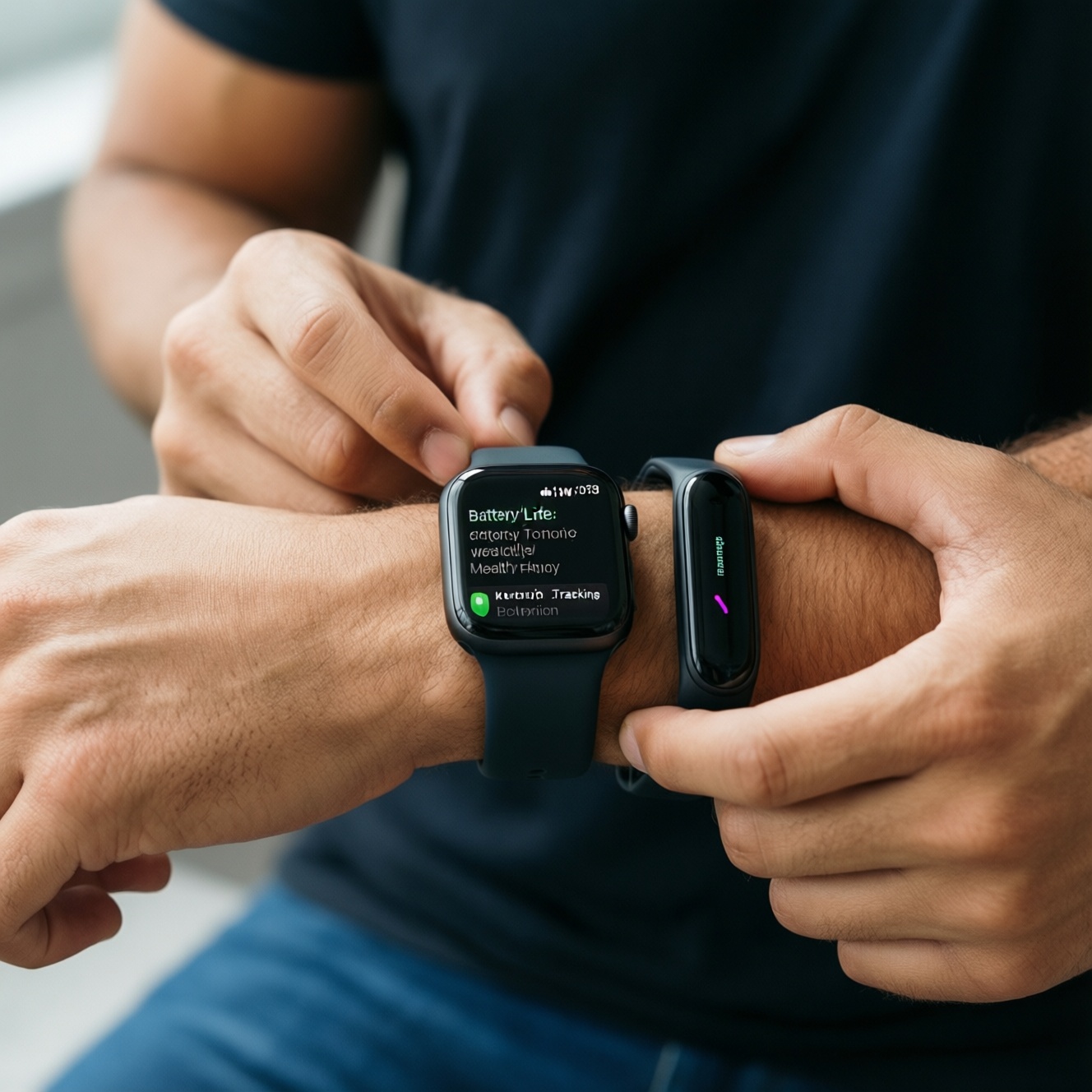
If you want a device that replaces quick phone checks and runs apps, pick a smartwatch; if you mainly want lightweight, long battery and simple activity/health metrics, pick a fitness band. This guide helps you เปรียบเทียบสมาร์ทวอทช์ กับ สายรัดสุขภาพ using real-life scenarios, practical limits, and a stepwise decision path.
Snapshot: which device fits your routine
- Choose a smartwatch if notifications, calls, payments, maps, and third-party apps matter daily.
- Choose a fitness band if you prioritize comfort, simplicity, and charging less often.
- For structured training, both can work; the best pick depends on sensors, sport profiles, and how you review data.
- If you are asking สมาร์ทวอทช์ ยี่ห้อไหนดี or สายรัดสุขภาพ ยี่ห้อไหนดี, decide ecosystem first (your phone + apps), brand second.
- If skin comfort or sleep tracking consistency is the goal, bands are often easier to wear 24/7.
- If you plan to ซื้อสมาร์ทวอทช์ mainly for health features, confirm what metrics are truly actionable for you (and which are estimates).
Fundamental differences: smartwatches vs fitness bands
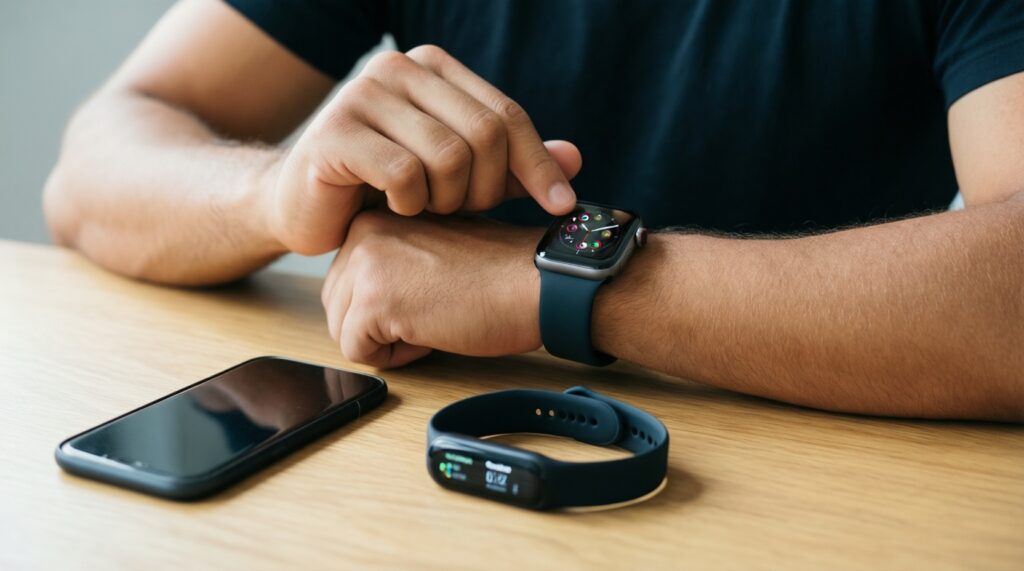
Use these criteria to choose faster and avoid paying for features you will not use.
- Primary job: smartwatch extends the phone; band tracks health/activity with minimal distractions.
- App depth: smartwatches typically support richer apps; bands usually keep to built-in functions.
- Interaction: watch = larger screen, more input; band = glanceable stats and quick controls.
- Notification handling: watch is better for replying/voice actions; band is better for basic alerts.
- 24/7 wearability: bands tend to be lighter and less intrusive for sleep.
- Battery strategy: watch often needs more frequent charging; band is optimized for longer cycles.
- Sensor expectations: both use optical HR; higher-end watches may add more advanced sensors, but accuracy still depends on fit, skin, motion, and algorithms.
- Durability and risk: a bigger, pricier device may raise "damage anxiety" for rough use; bands are easier to treat as a tool.
Health and activity tracking: accuracy, metrics, and limitations
Most "accuracy" differences come from fit, movement type, and how consistently you wear the device. For typical users, the most useful outputs are trends (resting HR trend, sleep consistency, steps/activity minutes), not single readings. Choose based on which metrics you will act on weekly.
| Option | Who it fits | Pros | Cons | When to choose |
|---|---|---|---|---|
| Fitness band (basic) | Beginners, office workers, people who want "set and forget" | Light; simple goals; usually easier 24/7 wear; minimal setup | Fewer sport modes; limited on-device analysis; smaller display | When you want steps, sleep routine, and basic HR trends without managing apps |
| Fitness band (advanced) | Users tracking sleep, stress-style estimates, and guided workouts | Better dashboards than basic bands; more sport profiles; still compact | Still limited apps; fewer "smart" features vs watches | When you plan to ซื้อสายรัดสุขภาพ but need richer training/sleep summaries |
| Smartwatch (entry) | People who need notifications + basic workouts | Bigger screen; better notification handling; more watch-like UI | More charging; can be bulky for sleep; app quality varies | When convenience features matter as much as tracking |
| Smartwatch (sports-focused) | Runners/cyclists/gym users who want structured training views | Training tools; configurable data screens; stronger workout logging | More settings complexity; overkill if you only want daily activity | When you review training sessions and adjust plans, not just "close rings" |
| Smartwatch (LTE/calls) | Users who want phone-less moments (errands, short runs) | Calls/messages without phone nearby (if supported); safety convenience | More battery drain; setup with carrier may be needed; higher ownership complexity | When leaving the phone behind is a real weekly habit |
| Hybrid approach (band + phone) | Minimalists who still want high-quality phone apps for analysis | Band stays comfortable; phone does heavy lifting for reports | More device switching; fewer on-wrist "smart" actions | When you want clean tracking but dislike the smartwatch lifestyle |
Practical limitations to keep in mind
- Optical HR during intense motion: wrist sensors can lag or spike with sprinting, rowing, heavy lifting, or loose straps.
- Sleep stages are estimates: useful for patterns (bedtime consistency) more than exact stage minutes.
- Calories and "stress" scores: often model-based; treat as directional feedback, not a precise measurement.
- GPS quality depends on usage: outdoor tracking stability can vary with buildings, trees, and how you start/stop sessions.
Connectivity, apps and ecosystem lock‑in
Match the device to your phone and the apps you will actually open.
- If you frequently triage notifications, dictate replies, or act from your wrist, then a smartwatch is the more natural fit.
- If you just want silent nudges (move reminders, alarm, basic message previews), then a fitness band is enough.
- If you rely on a specific health/training platform and want all data in one place, then pick the device whose companion app you will commit to long-term (switching later can break your history).
- If you plan to use payments, transit-style taps, or maps on-wrist, then prioritize smartwatch support and local availability in Thailand over raw sensor lists.
- If you are choosing between brands because you asked สมาร์ทวอทช์ ยี่ห้อไหนดี, then test the companion app first: language, units, export, and how workouts/sleep are presented.
Design, battery life and durability trade‑offs
- Commit to wear time: if you want sleep + daytime tracking, choose the device you can wear comfortably for 24/7.
- Decide charging tolerance: if charging is a friction point, bias toward a band or a simpler watch setup.
- Check strap and skin comfort: prioritize breathable materials and easy cleaning if you sweat often.
- Consider screen size vs discretion: larger screens help workouts and messages; smaller devices disappear on the wrist.
- Match durability to habits: if you bang wrists on desks or train outdoors, pick a design you will not baby.
- Confirm water use cases: decide whether you need swim tracking or just splash resistance, then choose accordingly.
User personas: matching devices to real daily workflows
Personas with practical pros/cons and a purchase direction
-
Busy office worker who wants fewer phone checks
- Pros (smartwatch): faster triage; calendar nudges; quick replies/voice actions.
- Cons (smartwatch): more distractions; charging routine becomes mandatory; heavier for sleep.
- Recommendation: choose an entry smartwatch if notifications drive daily decisions; otherwise pick an advanced band.
-
Beginner improving health basics (steps, sleep routine)
- Pros (band): easiest to wear 24/7; simple goals; low mental overhead.
- Cons (band): limited on-wrist guidance; fewer "smart" conveniences.
- Recommendation: start with a basic or advanced fitness band; upgrade only when you can name missing features.
-
Runner/cyclist who reviews workouts weekly
- Pros (sports watch): configurable data screens; better workout logging; training-oriented tools.
- Cons (sports watch): more menus; can feel like a mini-computer; higher cost to maintain (straps/accessories).
- Recommendation: pick a sports-focused smartwatch; add a band only if you want a lighter sleep tracker.
-
Gym lifter and mixed training (HIIT + weights)
- Pros (either): session logging and HR trends are useful for consistency.
- Cons (either): wrist HR can be unreliable under gripping/rapid movement; calorie numbers are estimates.
- Recommendation: choose based on comfort and workout UI; don't overpay for "precision" claims.
-
Minimalist who hates charging and notifications
- Pros (band): lightweight; fewer interruptions; simpler to maintain.
- Cons (band): less convenience for calls/maps/payments.
- Recommendation: pick a fitness band; spend time tuning goals and reminders instead of chasing features.
Common selection mistakes to avoid
- Buying a smartwatch for "health" but never wearing it to sleep because it feels bulky.
- Picking a band for price, then realizing you need better notification handling and end up upgrading quickly.
- Over-trusting single readings (sleep stage, stress, calories) instead of tracking trends and behavior changes.
- Ignoring the companion app experience (language, charts, exports) and later disliking how data is presented.
- Choosing based on sensor lists while forgetting fit/strap comfort is the real accuracy limiter.
- Assuming all notifications are equal; some devices handle Thai fonts and app alerts better than others.
- Not deciding "phone-less" requirements up front (calls, payments, maps), then being disappointed.
- Chasing "สมาร์ทวอทช์ ยี่ห้อไหนดี" threads without checking whether the brand's ecosystem matches your phone habits.
Cost analysis, upgrades and long‑term ownership
- Step 1: Do you want to act from your wrist (reply, calls, payments, maps) most days?
- Yes → smartwatch path.
- No → go to Step 2.
- Step 2: Will you wear it for sleep tracking at least 5 nights/week?
- Yes → fitness band or smaller watch; prioritize comfort.
- No → go to Step 3.
- Step 3: Do you review workouts and want structured training screens?
- Yes → sports-focused smartwatch.
- No → advanced band or entry smartwatch based on notification needs.
- Step 4: Is charging friction a deal-breaker?
- Yes → lean band and keep features minimal.
- No → choose based on app ecosystem and daily convenience.
For long-term ownership, the best fit for "daily convenience and communication" is typically a smartwatch, while the best fit for "consistent 24/7 tracking with minimal maintenance" is typically a fitness band. If you expect upgrades, buy for the workflow you will sustain, not the longest feature list-especially when deciding whether to ซื้อสมาร์ทวอทช์ now or ซื้อสายรัดสุขภาพ and upgrade later.
Quick answers to selection dilemmas
Which is better for sleep tracking: smartwatch or fitness band?
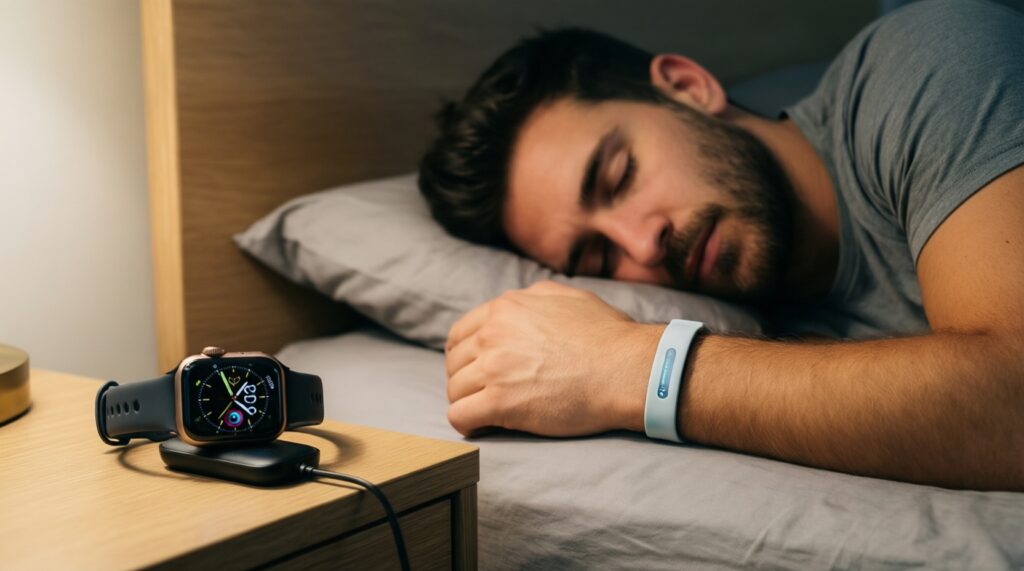
A fitness band is often easier to wear all night due to weight and size. A smartwatch can work well if it's comfortable and you can keep a consistent charging routine.
Do I need a smartwatch to get accurate heart rate during workouts?
Not necessarily; both categories use wrist optical sensors and accuracy depends heavily on fit and movement type. If you do intense intervals or lifting, focus on comfort and stable strap fit rather than category.
Will a fitness band handle Thai notifications well in Thailand?
Many do, but notification quality varies by brand, font support, and phone settings. Test with your key apps before committing, especially if messages are your main reason to wear it.
Is choosing by "สมาร์ทวอทช์ ยี่ห้อไหนดี" or "สายรัดสุขภาพ ยี่ห้อไหนดี" a good approach?
Start with ecosystem and companion app experience, then shortlist brands. Brand rankings won't matter if the app, language, or data presentation doesn't fit your routine.
When does a smartwatch become overkill?
When you only need steps, sleep consistency, and basic reminders but end up managing apps, frequent charging, and extra notifications. In that case, an advanced fitness band is usually more practical.
What's the simplest rule for people comparing "เปรียบเทียบสมาร์ทวอทช์ กับ สายรัดสุขภาพ"?
If your top value is acting from the wrist, pick a smartwatch; if it's wearing comfort and low maintenance, pick a fitness band. Decide based on the actions you repeat weekly.