If you're deciding สมาร์ทวอทช์ รุ่นไหนดี for real-world use, prioritize validated heart-rate behavior during movement, sleep comfort plus stage logic, GPS stability in Thai city conditions, and battery under your actual routines. This review compares smartwatch "types" (not brand hype) so you can ซื้อสมาร์ทวอทช์ that matches your persona: runner, commuter, office worker, or sleep-focused user.
Snapshot: Pulse, Sleep, GPS and Battery - What the Tests Show
- Heart-rate reliability depends more on fit, sensor/LED layout, and motion handling than on marketing claims about สมาร์ทวอทช์ วัดชีพจร แม่นยำ.
- Sleep tracking quality is usually limited by comfort (strap/case) and whether the watch detects "awake vs light sleep" robustly when you move or wake briefly.
- สมาร์ทวอทช์ GPS performance is mainly about lock stability, multipath handling near tall buildings, and how the watch behaves when switching between open sky and covered areas (BTS/MRT walkways, malls).
- Battery results vary drastically by always-on display, notification volume, continuous HR, and "GPS workout frequency"-not the headline number on the box.
- สมาร์ทวอทช์ แบตอึด typically means sacrificing either a bright always-on screen, dense smart features, or frequent multi-band GNSS use.
Heart-rate Accuracy: Sensor Types, Algorithms and Field Validation
Use these criteria to judge heart-rate tracking in a way that predicts real workouts and daily stress trends, not just sitting-still readings.
- Fit and mechanical stability: case thickness, sensor bump design, and strap stiffness; a stable seal matters more than extra sensors.
- Sensor layout: LED count/placement and photodiode geometry; better layouts tend to resist motion artifacts during running and interval work.
- Skin/contact tolerance: performance on different skin tones, tattoos, sweat, and sunscreen; look for watches that keep tracking without frequent dropouts.
- Motion handling: does HR spike/drop falsely during arm swing, gripping a handlebar, or lifting weights?
- Update rate and smoothing: aggressive smoothing looks "stable" but can lag during intervals; too little smoothing becomes noisy and misleading.
- Workout-mode behavior: some watches change sampling/filters per sport; check whether "strength training" and "running" behave differently.
- External HR support: chest-strap pairing (BLE/ANT+) is the practical escape hatch if you care about intervals or cycling.
- On-wrist placement guidance: clear instructions (tightness, distance from wrist bone) and on-device fit check reduce user-caused errors.
- Field validation mindset: trust watches that let you review raw-ish trends (dropouts, gaps) rather than only a single "average HR" summary.
Sleep Tracking Deep Dive: Stage Detection, Sleep Quality Metrics and Comfort Factors
Sleep tracking is a trade-off between comfort (can you wear it all night?), signal quality (stable contact), and how the device converts movement/HR/HRV into stages. Choose a "type" that matches your tolerance for wrist wear and how actionable you want the insights to be.
| Variant | Who it fits | Pros | Cons | When to choose |
|---|---|---|---|---|
| Fitness-focused sports watch (training-first OS) | Runner persona; tri/fitness users who care about trends over "smart apps" | Typically stable overnight sampling; good recovery-style dashboards; often strong strap stability | Less polished "smartwatch" UX; fewer third-party apps | If you want sleep + training readiness in one loop and can accept a more utilitarian interface |
| Full smartwatch (app-first platform) | Office worker persona; heavy notifications, calls, calendar | Comfortable UI; rich integrations; good bedtime/alarms ecosystem | Battery can drop fast with always-on display and many notifications; sleep features vary by app | If daily smart features matter most and you're okay charging more often to keep sleep enabled |
| Outdoor/multisport watch (navigation-first) | Runner + weekend hiker persona; people mixing city runs and trips | Often great sensor contact; strong overnight durability; consistent tracking across modes | Bigger/heavier cases can reduce sleep comfort; may feel bulky for side sleepers | If you want one device for sleep plus long activities and can tolerate a larger watch |
| Smart band / slim tracker | Night-sleeper persona; people who hate wearing a heavy watch in bed | Highest comfort for sleep; usually easy to wear nightly; minimal "wrist presence" | Weaker GPS (often phone-tethered); fewer training tools; simpler sleep interpretation | If your #1 goal is consistent nightly wear and you can accept simpler analytics |
| Hybrid watch (analog look + sensors) | Commuter persona; style-first users with basic health goals | Looks like a normal watch; often long battery; low distraction at night | Sleep staging may be limited; fewer signals (and fewer troubleshooting tools) | If you want gentle sleep/health summaries with minimal screens and minimal charging |
| Budget smartwatch (value-first) | First-time buyer persona; casual tracking and notifications | Low entry cost; basic sleep duration and resting HR | Sleep stages can be inconsistent; sensors/algorithms vary widely between models | If you mainly want step/sleep duration, accept limitations, and plan to upgrade later |
GPS and Location Reliability: Lock Times, Track Accuracy and Mixed-Signal Conditions
In Thailand, GPS reliability is heavily influenced by urban canyons (Bangkok CBD), covered walkways, tree cover in parks, and quick transitions between open and obstructed sky. Use scenario-based selection:
- If you run in dense city streets (tall buildings), then choose a watch type known for stronger GNSS handling and clear "GPS quality" indicators; avoid relying on phone-tethered GPS if your phone sits deep in a bag.
- If you start workouts quickly (traffic-light runs, short sessions), then choose a watch that reacquires satellites reliably after leaving buildings; treat slow reacquisition as a deal-breaker for interval training.
- If you frequently move between indoor and outdoor areas (malls, BTS walkways, stadium tunnels), then prefer devices that keep a clean track without sharp "teleport" jumps when signal returns.
- If you cycle or ride motorbike and want stable speed/distance, then prioritize consistent sampling and a mount/strap setup that minimizes wrist rotation; consider pairing sensors (speed/cadence) if your platform supports them.
- If you hike in mixed tree cover, then pick outdoor/multisport types and avoid thin, fashion-first bodies that compromise antenna performance.
Battery Performance Across Use Profiles: Standby, Active GPS and Continuous HR
Use this quick selection algorithm; it maps directly to the battery drains that matter in real life (screen, radios, sensors, GNSS).
- Write your weekly pattern: number of GPS workouts, typical duration, and whether you need music/calls from the watch.
- Decide if you truly need always-on display; if yes, treat "battery-first" claims skeptically and expect more frequent charging.
- Choose your HR strategy: continuous HR all day vs periodic; continuous HR improves trends but costs battery.
- Set notification scope: keep only high-value apps (calls, banking OTP, messaging) to avoid constant screen wakes.
- If you rely on GPS accuracy, prefer watches that can run GNSS without phone-tethering; if you accept phone GPS, battery demands on the watch drop but accuracy depends on phone placement.
- Plan charging behavior: nightly top-up vs 2-3x/week; match the device type to your routine rather than forcing a routine onto the device.
- Before committing, test your exact settings for a week (AOD, HR, notifications, workouts) and judge battery by behavior, not the "rated" figure.
Everyday Usability: Display, Strap, Alerts, Third‑Party App Integration
These are the mistakes that cause most "returns" and dissatisfaction-especially when you buy based on spec sheets instead of day-to-day friction.
- Ignoring wrist comfort: a thick case and rigid strap can ruin sleep tracking because you stop wearing it at night.
- Assuming one-size HR fit: wearing the watch too loose, too low on the wrist bone, or with a slippery strap creates false HR spikes/dropouts.
- Overbuying smart features: choosing an app-first platform but then disabling most features to save battery (ending with a worse "smart band").
- Notification overload: enabling every app produces constant vibrations, more screen wakes, and worse sleep quality (and worse battery).
- Underchecking app ecosystem: some health metrics live in proprietary apps; verify export/sync options if you already use Apple Health/Google Fit/Strava-style workflows.
- Confusing "GPS present" with "GPS good": antenna design and software filtering matter; tracks can look smooth while still drifting in challenging areas.
- Not planning charging logistics: proprietary chargers and short cables can be annoying for commuters and travelers.
- Skipping durability fit-for-purpose: shower, pool, sweat, and heat exposure differ; choose straps and casings that won't irritate skin in humid weather.
Head-to-Head Comparisons: Best Picks for Runners, Commuters, and Sleep‑Focused Users
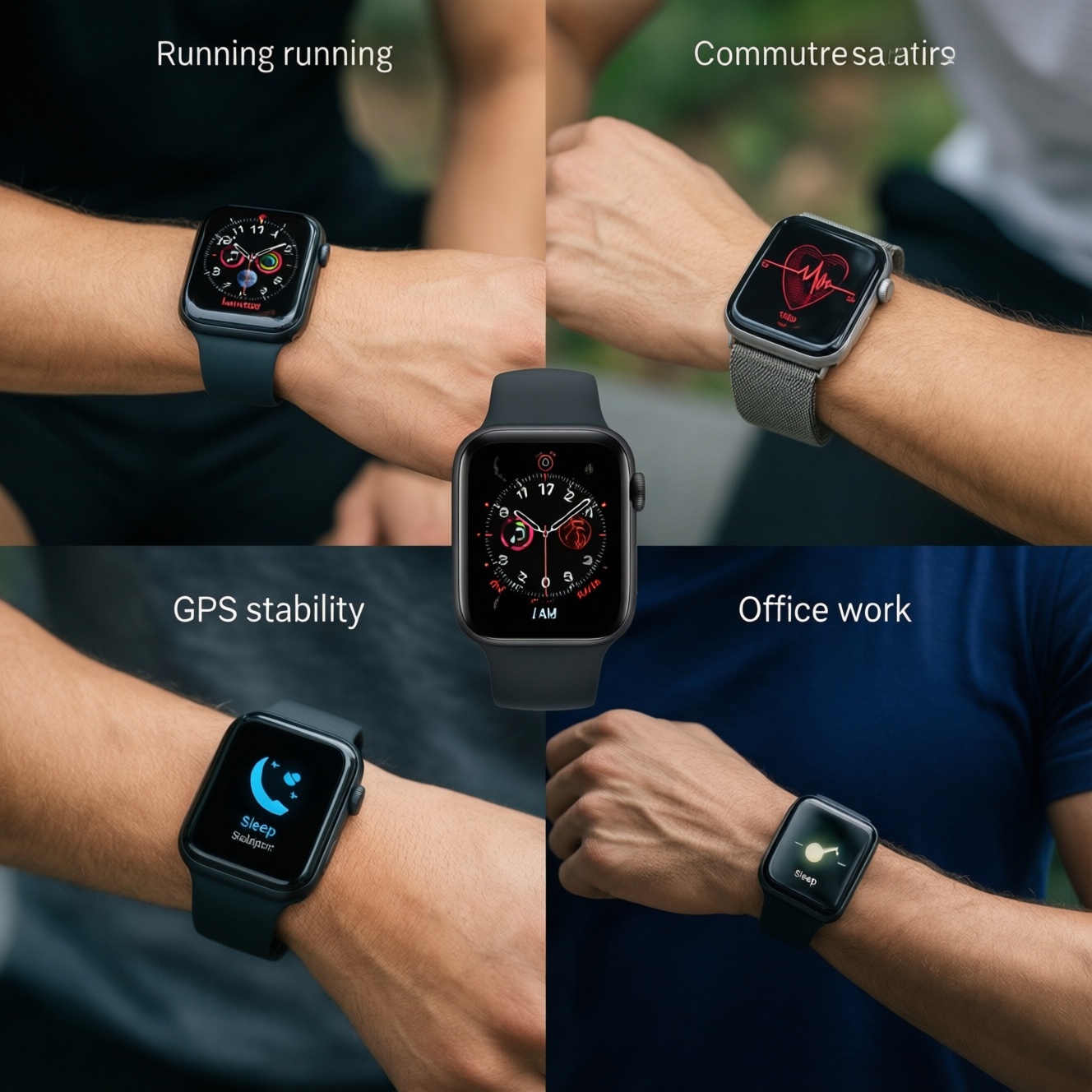
Best fit for a runner is usually a fitness-focused sports watch (or outdoor/multisport if you also hike) because stable HR under motion and reliable GNSS matter more than apps. Best fit for a commuter/office worker is a full smartwatch for calls, calendar, and integrations, accepting more frequent charging. Best fit for sleep-focused users is a slim smart band or a comfort-first sports watch, chosen primarily by nightly wearability and consistent sampling.
Practical Concerns Answered: Short, Actionable Responses
Can a wrist smartwatch replace a chest strap for intervals?
For steady runs it can be fine, but intervals amplify motion artifacts and filtering lag. If interval accuracy matters, choose a watch that supports external HR pairing and use a chest strap for hard sessions.
How tight should I wear the watch for more reliable heart-rate?
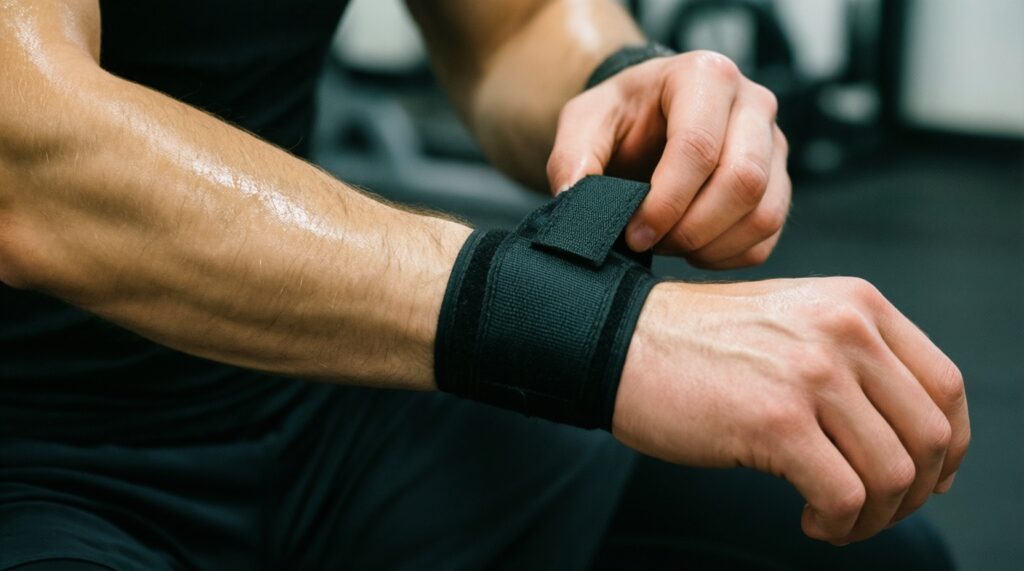
Snug enough that it doesn't slide during arm swing, but not so tight it leaves deep marks. Place it slightly above the wrist bone and re-check after you start sweating.
Is phone-tethered GPS acceptable for city running?
Only if the phone has a clear sky view (armband/hand) and you keep it consistent. If the phone sits deep in a backpack or pocket, expect worse tracks and delayed pace changes.
Why does sleep staging look "wrong" even when total sleep time is close?
Stages are an inference from movement and HR/HRV, and brief awakenings can be misclassified. Prioritize consistency and trends (bedtime, wake time, interruptions) over any single-night stage chart.
What settings usually destroy battery first?
Always-on display, frequent screen wakes from notifications, continuous HR with extra sensors, and long GPS sessions. Disable low-value notifications before reducing health tracking.
How do I test a watch in the first week to avoid a bad choice?
Run your real routine for 7 days with your intended settings (AOD, notifications, workouts). If you're changing behavior just to keep the watch alive, it's the wrong battery/usability fit.
Do I need third-party apps, or is the default health app enough?
If you only want basic trends, defaults are fine. If you need structured training plans, data export, or specific platforms, verify integrations before buying because ecosystems differ widely.