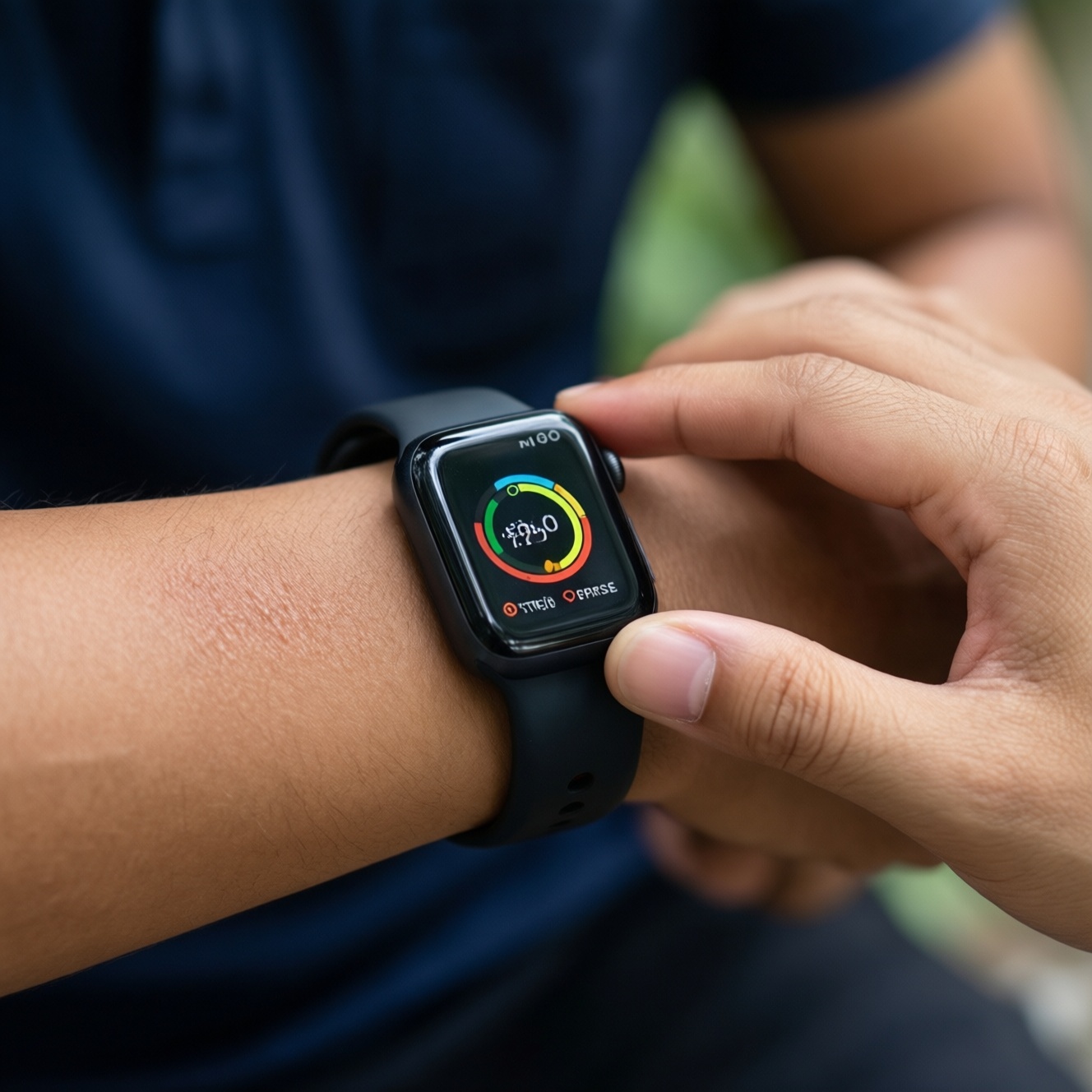
Wearables can estimate SpO2, stress, and skin temperature well enough for trends and screening, but real-world accuracy varies with fit, motion, skin perfusion, and algorithms. To choose the best option in Thailand, match the sensor type to your use case, then run a short self-test protocol against a trusted reference before relying on alerts.
Practical Summary of Core Findings
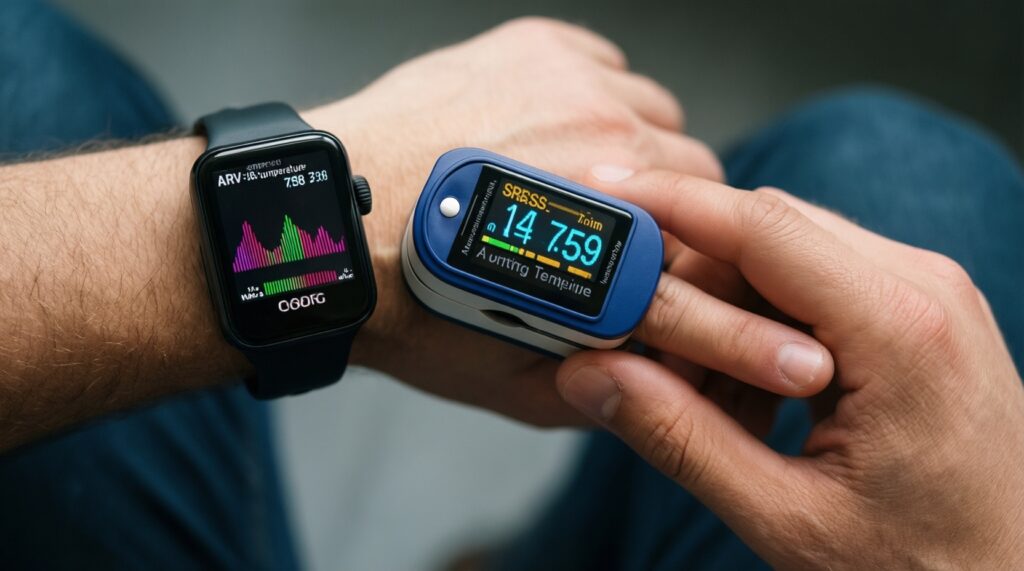
- For SpO2, prioritize devices that support on-demand measurements, tight fit, and clear "signal quality" feedback over marketing claims.
- For "stress," treat results as HRV-based coaching; use it for patterns, not diagnosis or moment-to-moment truth.
- Wrist temperature is usually skin temperature; it is best for overnight baselines and deviation detection, not fever confirmation.
- Motion, cold hands, tattoos, loose straps, and low battery are the most common reasons readings look wrong.
- Pick by persona: clinician-support needs (spot-check reliability), active users (motion handling), curious consumers (comfort and consistency).
- Before trusting any model, validate it with a simple at-home protocol and keep a "do-not-trust" list of situations.
How Photoplethysmography and Temperature Sensors Work in Wearables
Most consumer wearables estimate heart rate and SpO2 with wrist PPG (green/red/IR LEDs + photodiodes) and estimate temperature with a skin thermistor plus compensation (ambient sensor and/or algorithm). Use these criteria to choose a device that will behave predictably in daily use.
Selection criteria that actually change outcomes
- Sensor stack: red + infrared PPG for SpO2, not only green HR LEDs; look for explicit SpO2 hardware support.
- Fit mechanics: strap design, caseback shape, and size options; a stable, snug fit matters more than brand.
- Sampling modes: on-demand SpO2 + continuous/overnight options; stress/HRV should support "at rest" sessions.
- Signal quality feedback: prompts for strap tightening, motion warnings, or poor perfusion indicators.
- Temperature method: whether it states "skin temperature," "wrist temperature," or "estimated body temperature," and how it builds a baseline.
- Algorithm transparency: whether it explains when readings are invalid (exercise, cold exposure, irregular rhythm).
- Data export & review: ability to view raw trends, nightly graphs, and timestamps; avoids overreacting to single numbers.
- Battery under real use: SpO2 and overnight temperature cost battery; low power can degrade sampling frequency.
- Support in Thailand: warranty, return policy, and availability of accessories (spare strap sizes improve data quality).
SpO2 Measurement: Technical Basis, Typical Error Sources, and Limits
SpO2 on wearables is an optical estimate derived from red/IR light absorption changes with pulsatile blood flow. In the field, the main failure mode is not "wrong math," but weak or noisy signal from motion, poor contact, or low perfusion. If you're searching "สมาร์ทวอทช์วัด SpO2 ยี่ห้อไหนดี", choose by measurement conditions and testability, not by a single headline feature.
Comparison of common SpO2-capable form factors
| Variant | Who it fits best | Pros | Cons | When to choose |
|---|---|---|---|---|
| Mainstream smartwatch (wrist PPG, red/IR) | Curious consumers and general wellness tracking | Convenient; integrates sleep + activity; frequent trend data | More motion artifacts; fit-sensitive; spot checks can be inconsistent | If you want one device for HR + sleep + periodic SpO2 checks |
| Fitness band (wrist PPG, compact) | Budget-focused users and lightweight wearers | Comfort; often good overnight compliance | Smaller sensor area; fewer quality prompts; can struggle on some wrists | If comfort and consistency overnight matter more than spot-check confidence |
| Smart ring (finger PPG) | Sleep-focused users who dislike wrist devices | Finger site can be stable during sleep; high wear compliance | Fit is critical; cold hands degrade signal; sizing/returns matter | If your main goal is nightly baselines and you can get sizing right |
| Upper-arm optical wearable (arm PPG) | Active users needing better motion handling | Often steadier than wrist during exercise; strong contact possible | Less common ecosystem; may prioritize HR over SpO2 features | If you want fewer wrist-motion issues and can wear an armband regularly |
| Wrist pulse oximeter (purpose-built, tighter strap) | Clinician-adjacent home monitoring and higher-confidence spot checks | Designed for SpO2 use; clearer measurement workflow | Less lifestyle features; bulkier; may not be "smartwatch-like" | If you care more about repeatable spot-checks than apps or notifications |
| Fingertip pulse oximeter (spot-check reference, not wearable) | Anyone validating a wearable at home | Fast spot checks; useful comparator for your self-test protocol | Not continuous; sensitive to nail polish/cold; quality varies by model | If you need a simple benchmark before trusting wearable SpO2 trends |
Practical limits to assume (so you don't over-trust)
- Spot checks are harder than overnight: daytime movement and variable perfusion create more bad samples.
- Single readings are fragile: treat one low SpO2 value as "recheck," not as a conclusion.
- Fit dominates brand: the same model can be "good" on one wrist and "bad" on another.
Stress Assessment via HRV and Algorithmic Inference: What's Reliable
Wearable "stress" is usually inferred from HRV (and sometimes skin temperature, sleep, activity) plus an algorithm that tries to separate recovery from strain. If you're comparing "นาฬิกาวัดความเครียด ราคา", focus on whether the device guides you to measure at rest, shows confidence/quality, and explains what inputs drive the score.
Scenario-based recommendations (if... then...)
- If you need day-to-day recovery coaching, then choose a device with overnight HRV baselines and clear sleep segmentation; rely on trends, not hourly stress spikes.
- If you do high-intensity training, then use stress features mainly for rest days; during workouts, motion and breathing patterns can mislead stress inference.
- If you have irregular rhythm alerts or known arrhythmia, then treat stress scores as low confidence unless the device explicitly states how it handles irregular beats.
- If your goal is workplace stress management, then pick a device that supports guided breathing sessions and shows before/after HRV change rather than a vague single score.
- If you mainly care about value, then choose a simpler band/watch but ensure it offers consistent measurement windows; "cheap stress numbers" without repeatability are noise.
Environmental and Physiological Confounders in Daily Use
Use this quick decision checklist to predict whether a wearable will behave well for your body and routine in Thailand's heat, air-conditioned environments, and frequent indoor/outdoor transitions.
- Temperature swings: if you move between AC and hot outdoors, expect perfusion changes; prioritize devices that flag poor signal and remeasure after 5-10 minutes at a stable temperature.
- Skin perfusion: if your hands get cold easily, consider ring sizing carefully or prefer purpose-built spot-check tools for SpO2.
- Fit tolerance: if you dislike tight straps, don't expect stable SpO2 on the wrist; choose comfort-first for trends only.
- Motion profile: if you walk, ride, or use hands a lot, plan on overnight SpO2 as the main reliable window.
- Skin characteristics: tattoos, scars, heavy hair, and very oily skin can reduce optical quality; verify with a self-test before committing.
- Measurement hygiene: clean the sensor window; sweat and sunscreen films can degrade readings.
- Expectation control: decide upfront whether you need trends (wellness) or spot-check confidence (monitoring); buy accordingly.
Clinical Validation Studies versus Field Performance: Interpreting Evidence
Validation claims can be real yet still not match your daily experience, because lab protocols control motion, fit, and perfusion. Avoid these selection mistakes when shopping for a "นาฬิกาสุขภาพ วัดชีพจร ความดัน SpO2 ราคา" bundle of features.
- Equating "has SpO2" with "works during exercise": many devices perform best at rest or during sleep.
- Ignoring the measurement workflow: no quality indicator and no retake prompts usually means more bad data.
- Over-weighting one review sample: fit and skin differences can flip results; look for consistency across use cases.
- Assuming "temperature" means core body temperature: most are skin-based and need baselines; for "สมาร์ทวอทช์วัดอุณหภูมิร่างกาย รุ่นไหนดี", pick the one that clearly explains baseline and deviations.
- Trusting absolute numbers over trend direction: a stable baseline and meaningful deviations are more actionable than chasing exact values.
- Buying without a return plan: optical wearables are personal-fit devices; treat the first week as a fitting and verification period.
- Confusing blood pressure claims: cuffless BP estimates (if offered) are highly sensitive to calibration and conditions; treat as experimental unless you can validate regularly.
- Skipping accessory sizing: wrong strap size is a silent accuracy killer.
Selecting and Testing a Wearable: Protocols for Real-World Confidence
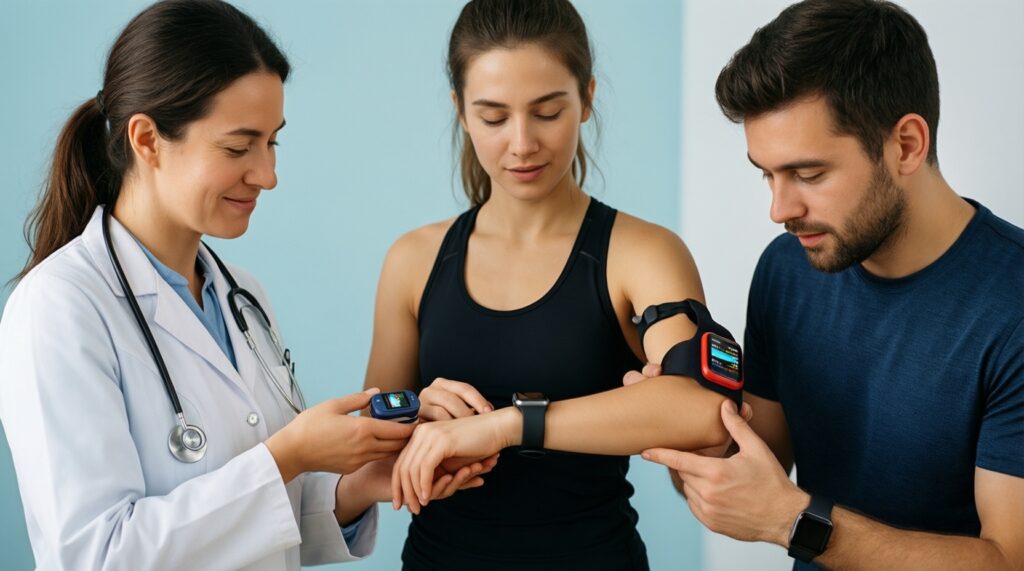
Best fit for a clinician-adjacent user is a purpose-built SpO2 workflow (wrist oximeter or a smartwatch you can repeatedly validate); best fit for an active user is a device that stays stable under motion (often armband for training plus a simpler sleep tracker); best fit for a curious consumer is a comfortable smartwatch/band used mainly for overnight trends. For buying in Thailand ("เครื่องวัดออกซิเจนในเลือดแบบสวมใส่ ซื้อที่ไหน"), prioritize sellers with easy returns so you can complete the test below.
7-day confidence protocol (do this before you rely on alerts)
- Fit setup: find the tightness that prevents sliding; mark the strap hole/notch you used.
- Baseline week: collect overnight SpO2 and temperature for 5-7 nights with consistent sleep timing.
- Spot-check routine: take 3 on-demand SpO2 readings per day at rest (sitting, warm hands), and keep the middle value.
- Reference comparison: compare spot checks to a fingertip oximeter you trust (same arm position, same time), focusing on repeatability and large mismatches.
- Stress sanity check: measure stress/HRV at the same time daily (morning seated). Note caffeine, alcohol, late meals, and poor sleep.
- Failure-mode log: write down when readings fail (sweat, motorbike ride, cold office, loose strap) and stop using those contexts for interpretation.
- Decision: keep the device only if your data is stable enough to inform habits (sleep, recovery, breathing) without frequent unexplained outliers.
Users' Top Concerns and Straight Answers
Is wearable SpO2 good enough to detect low oxygen at home?
It's useful for trends and rechecks, but a single low reading should trigger a repeat measurement at rest with warm hands. If it stays low or you have symptoms, confirm with a reliable fingertip oximeter or clinical assessment.
Why does my SpO2 drop during workouts even when I feel fine?
Motion artifacts and reduced contact quality are common during exercise. Use SpO2 mainly at rest or overnight unless the device explicitly supports exercise-grade SpO2 and shows strong signal quality.
Can a watch really measure stress accurately?
It estimates stress indirectly from HRV and context. It's reliable for long-term patterns and recovery coaching, not for proving you are stressed in a specific minute.
Does "temperature" on a wearable mean fever detection?
Usually it's skin temperature and baseline deviation, not a thermometer-grade core temperature. Treat it as a signal to check with a proper thermometer if you feel unwell.
How should I compare models if I'm price-sensitive?
For "นาฬิกาวัดความเครียด ราคา", compare consistency features: quality prompts, on-demand measurements, and exportable trends. A cheaper device that you wear nightly and fits well often beats an expensive one worn inconsistently.
Where should I buy in Thailand to reduce the risk of a bad fit?
For "เครื่องวัดออกซิเจนในเลือดแบบสวมใส่ ซื้อที่ไหน", choose authorized stores or major retailers with a clear return/exchange policy and multiple strap sizes. Fit problems are the most common reason for unreliable readings.