If you're choosing a workout smartwatch in Thailand, prioritize GPS consistency (especially in city canyons), heart-rate zone stability during intervals, and sleep/recovery signals you can act on. In practice, dual-band GPS and a chest strap give the most dependable training data, while most wrist sensors are best for steady efforts and trend tracking.
Top Findings at a Glance
- GPS accuracy depends more on chipset + antenna + how you wear the watch than on brand claims; dual-band helps most in dense areas.
- For สมาร์ตวอทช์วัดชีพจร โซนหัวใจ, optical wrist HR is workable for steady cardio but often lags or spikes during intervals and strength training.
- Sleep tracking is best used for consistency (bed/wake, disruptions, trend lines), not for "perfect" stage accuracy night to night.
- Battery life should be evaluated under your real training load: GPS mode, screen behavior, music, notifications, and multi-sport.
- Runners and triathletes get the biggest upgrade from dual-band GPS + chest strap; gym-focused users benefit more from comfort and app logging.
- For people searching สมาร์ตวอทช์ออกกำลังกาย รุ่นไหนดี, the "best" choice is the one whose weak points don't break your main workouts.
GPS Accuracy: Route, Distance and Signal Loss
Use these criteria before you ซื้อสมาร์ตวอทช์ GPS แม่น (or decide you don't actually need the most precise GPS):
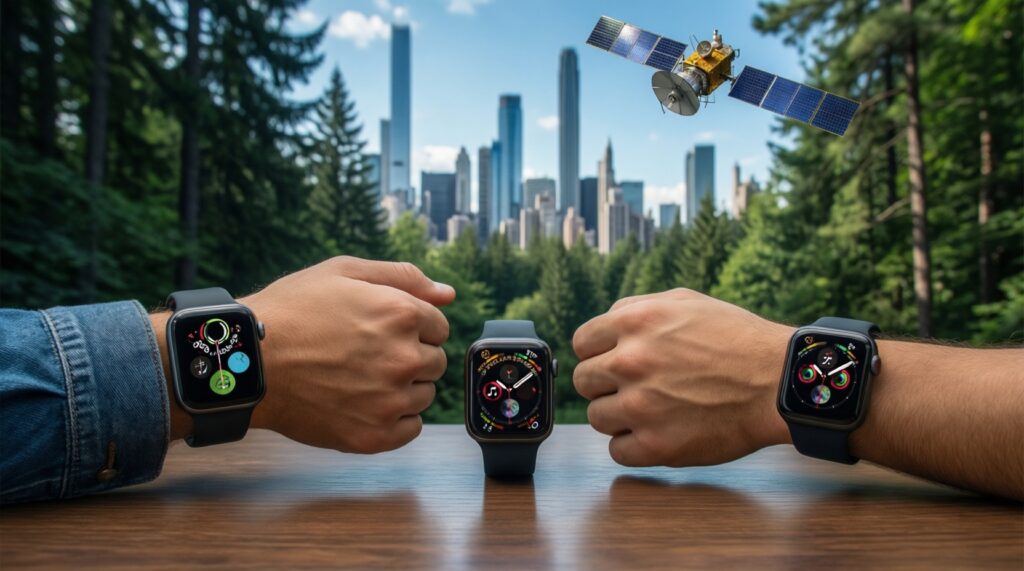
- GNSS type: dual-band/multi-frequency vs single-band; dual-band is usually more stable near tall buildings and under tree cover.
- Multi-constellation support: ability to use more than one satellite system can improve lock stability, depending on implementation.
- Signal-loss behavior: how the watch handles tunnels, sky-train stations, bridges, and short dropouts (smooth vs "teleport" jumps).
- Start-of-run lock time: fast lock is convenient; what matters more is whether accuracy holds after the first kilometer.
- Wrist placement and strap fit: loose fit can worsen both GPS (arm swing orientation) and HR; wear it snug above the wrist bone.
- Sampling and smoothing: aggressive smoothing can look "clean" but distort corners, intervals, and short loops.
- Route type you train on: park loops, riverside paths, city streets, treadmill (no GPS), mixed indoor/outdoor sessions.
- Phone independence: true watch GPS vs phone-assisted GPS; phone-assisted can be fine for casual runs but is inconsistent for structured training.
- Export and review tools: if you can't inspect tracks and splits, you can't validate accuracy when it matters.
Heart Rate Zones: Reliability During Intervals
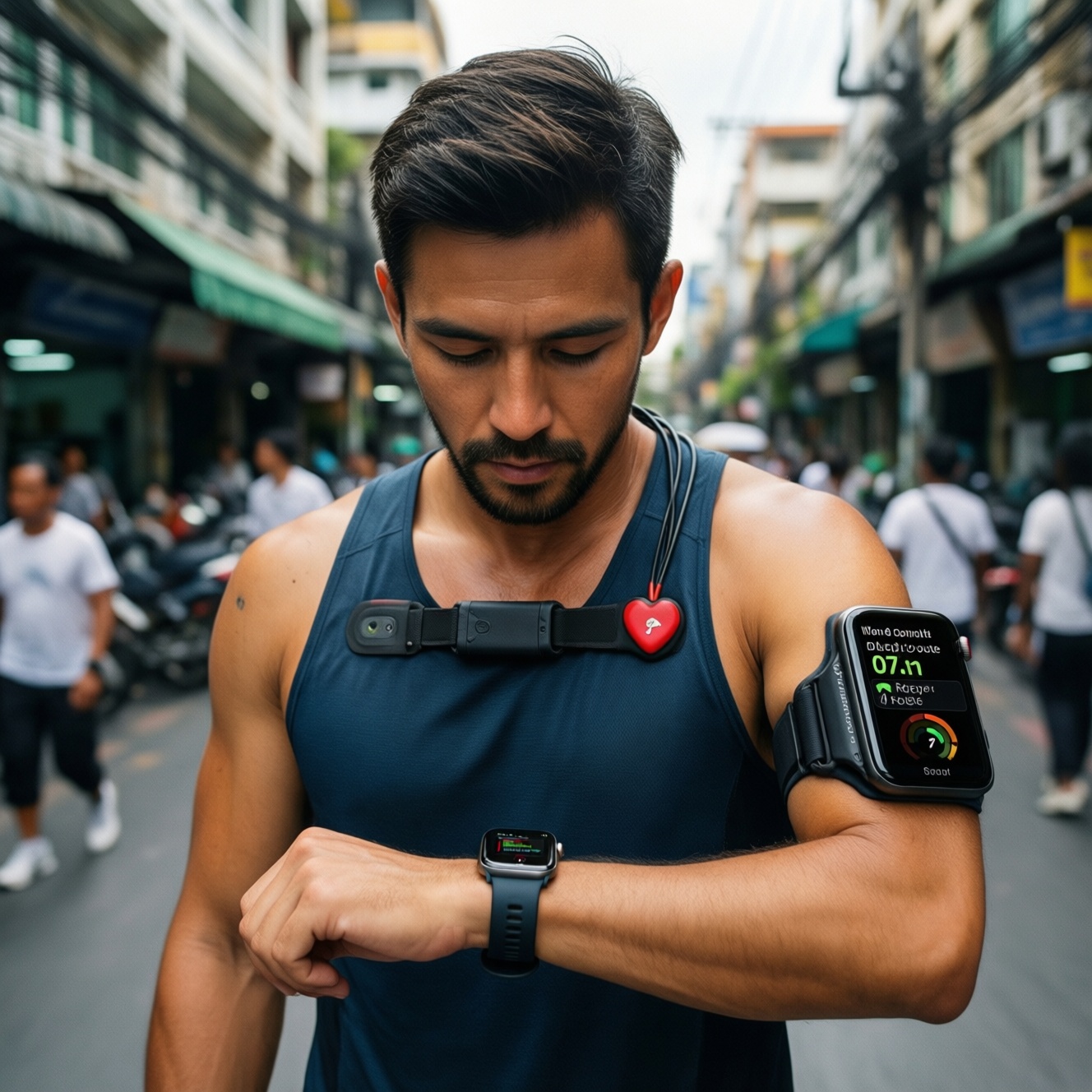
Choose based on the kind of effort you do. Wrist optical HR is often "good enough" for easy/steady sessions, but interval work exposes lag and cadence-related spikes. If your plan depends on tight zones, consider pairing with a chest strap.
| Variant | Who it fits | Pros | Cons | When to choose |
|---|---|---|---|---|
| Sports watch + dual-band GPS + solid optical HR | Runners, cyclists who also run, triathletes | More stable GPS in difficult environments; better workout tooling; zones are usable for steady efforts | Optical HR can still lag in intervals; typically pricier; may be bulkier for daily wear | If you're comparing สมาร์ตวอทช์สำหรับวิ่ง GPS ราคา, this is the "pay more, get fewer surprises" path for outdoor training. |
| Smartwatch with single-band GPS + optical HR | Mixed fitness, casual runners, gym-goers who run occasionally | Good all-day experience; adequate zones for easy runs; strong notifications/ecosystem | More GPS drift in dense areas; HR zones can spike with cadence/arm tension | If you want one device for life + workouts and you won't base intervals strictly on HR. |
| Phone-assisted GPS watch (connected GPS) + optical HR | Budget-focused users who always carry a phone | Cheaper; can leverage phone GNSS; lighter watches | Track quality depends on phone position and settings; dropouts when phone connection is unstable | If your priority is cost and you accept variability-avoid for races or strict pacing. |
| Optical HR-first watch with strong zone coaching features | People training by zones mostly in steady state (easy/tempo), indoor cardio | Clear zone prompts; simple guidance; good trends over weeks | Interval accuracy can be inconsistent; strength training often produces noisy readings | If you mainly need สมาร์ตวอทช์วัดชีพจร โซนหัวใจ guidance for consistent easy mileage and indoor sessions. |
| Any watch + chest strap (Bluetooth/ANT+) | Interval runners, cyclists doing VO2/threshold, triathletes | Fast response; stable zones in hard efforts; less affected by arm motion | Extra accessory; needs rinsing/maintenance; not everyone likes the feel | Choose this when zone compliance matters (intervals, tests, structured plans) and wrist HR keeps "jumping." |
| Gym-focused watch emphasizing reps/strength logging + optical HR | Gym-goers, classes, functional training | Comfortable; better strength UI; good daily wear | HR zones in lifting are less meaningful; optical HR can under-read with gripping and wrist flexion | If you want training logs and convenience more than physiological precision during lifts. |
| Persona: Runner (GPS-first) | 5K-marathon, structured workouts | Most benefit from dual-band GPS and pace stability | Wrist HR can mislead in intervals | Pick a watch with strong outdoor tooling; add a chest strap if you run intervals by HR. |
| Persona: Cyclist (HR-first) | Road/indoor trainer | Chest strap improves intervals and climbs; GPS is less critical if using a bike computer | Wrist HR suffers on handlebars | Choose strap support and easy data export to your cycling platform; consider watch GPS secondary. |
| Persona: Gym-goer (comfort-first) | Strength + classes + occasional cardio | Daily wear and logging matter most | Zone metrics are noisy for lifting | Choose the most comfortable watch with the best app logging; don't over-prioritize HR zone "precision." |
| Persona: Triathlete (multi-sport-first) | Swim/bike/run, brick workouts | Needs reliable mode switching and durable GPS/HR ecosystem | Complexity and cost | Choose multi-sport features + external sensor support; use a chest strap for bike/run quality. |
Quick trust rule: trust optical HR for easy runs and long steady rides; trust a chest strap for short intervals, threshold sets, hill repeats, and any session where zone timing matters.
Sleep Tracking: Stages, Awakenings and Recovery
Use sleep tracking to drive habits and training adjustments, not to chase a perfect "sleep stage" score. If you're deciding สมาร์ตวอทช์ติดตามการนอน ยี่ห้อไหนดี, focus on consistency, comfort, and whether the insights change your behavior.
- If you wake up tired but sleep duration looks normal, then prioritize a watch that shows awakenings and lets you correlate them with late caffeine, alcohol, room temperature, or stress.
- If you train early, then choose a watch with reliable alarm, bedtime reminders, and low-friction daily wear; perfect stage accuracy matters less than consistency.
- If your training load is increasing and you feel "flat," then use resting HR trend + perceived fatigue alongside sleep consistency to decide on an easy day.
- If you often do evening workouts, then pick a device/app that makes it easy to review how late intensity affects sleep and to set "wind-down" nudges.
- If you can't tolerate wearing a watch at night, then consider a lighter model or shift focus to morning readiness checks (resting HR, subjective soreness) instead of forcing sleep tracking.
Battery Life Under Real Training Loads
- Write down your weekly pattern: number of GPS workouts, longest session, and whether you need multi-sport.
- Decide your GPS mode priority: maximum accuracy (more battery cost) vs standard mode (more battery headroom).
- List battery-heavy features you will actually use: always-on display, music playback, LTE/eSIM, frequent notifications.
- Set a charging routine constraint: daily top-up vs every few days vs "only once per week."
- Check whether the watch supports battery-saving profiles that still keep the metrics you care about (GPS, HR sampling, screen behavior).
- If you travel or do long events, require a charging method you can execute easily (common cable type, power bank friendly) and a predictable low-battery warning.
Sensor Comparison: Optical HR vs Chest Straps
- Over-trusting wrist HR in intervals: optical HR often lags; by the time it shows Zone 5, the interval may be nearly over.
- Wearing it too loose: light leakage and motion create spikes or dropouts; tighten for workouts, loosen slightly after.
- Ignoring wrist position: placing the watch on the wrist bone reduces contact stability; move it a bit higher on the forearm.
- Strength training artifacts: gripping, wrist flexion, and forearm tension commonly distort optical readings-use RPE or a strap if HR-based.
- Cold weather/low perfusion: optical HR can under-read when hands are cold; warm-up longer or use a strap.
- Assuming "zones" are correct out of the box: zone setup depends on accurate max HR/threshold inputs; validate with field tests and how you feel.
- Mixing sensors without realizing it: some setups silently switch between wrist HR and strap; confirm which source was used for the workout.
- Neglecting chest strap care: poor electrode contact (dry strap, old strap, low battery) causes dropouts that look like fitness problems.
User Experience: App, Data Export and Daily Wear
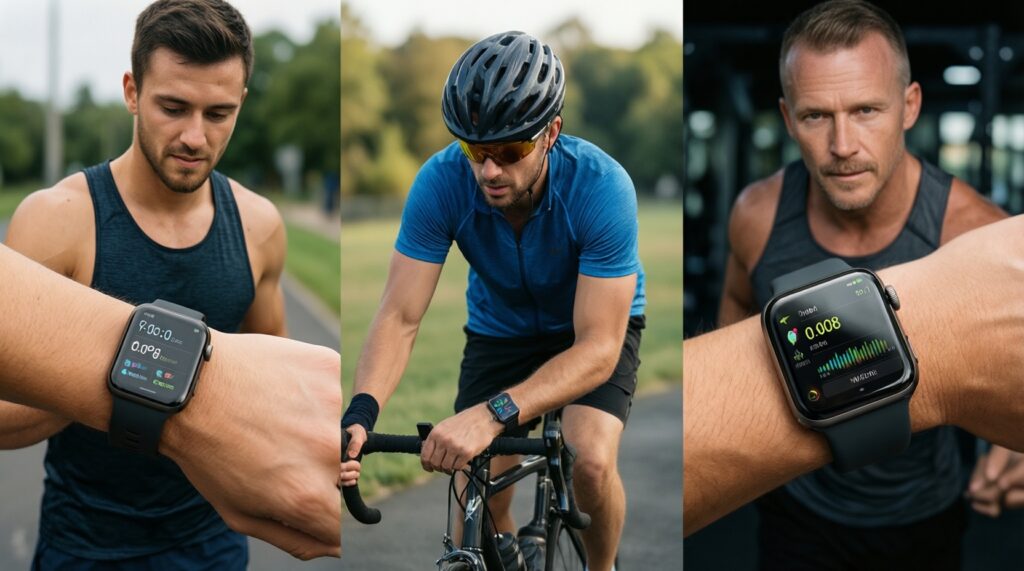
Best fit typically looks like this: for runners and triathletes who want dependable outdoor analysis, choose a training-focused watch ecosystem with strong exports; for cyclists who already use a bike computer, prioritize strap compatibility and clean data sharing; for gym-goers, pick the most comfortable watch with the simplest logging and daily wear experience-these choices answer "สมาร์ตวอทช์ออกกำลังกาย รุ่นไหนดี" more reliably than chasing one headline feature.
Common Practical Questions from Athletes
How can I tell if my watch GPS is accurate enough for my routes?
Run the same loop several times and compare distance consistency and corner shapes on the map. If tracks cut corners or drift in the same places, consider dual-band GNSS or more open routes for key sessions.
Is wrist heart rate good enough for heart rate zones?
For easy and steady workouts, often yes. For intervals, hills, and strength training, use a chest strap if you need accurate สมาร์ตวอทช์วัดชีพจร โซนหัวใจ behavior.
What should I prioritize if I mostly run in Bangkok with tall buildings?
Prioritize dual-band GPS and stable pace metrics over "pretty" smoothed tracks. This is the most practical path when you want ซื้อสมาร์ตวอทช์ GPS แม่น for urban conditions.
Can I rely on sleep stages to decide training intensity?
Use sleep stages as a rough trend, not a daily decision trigger. Base training adjustments on sleep consistency, how you feel, and simple trends like resting HR.
What matters most when choosing a watch for running price-to-value?
Match the feature spend to your training: dual-band GPS and structured workouts for serious running, or a simpler GPS watch for casual mileage. That's the most honest way to judge สมาร์ตวอทช์สำหรับวิ่ง GPS ราคา.
Which sleep tracking features are actually useful?
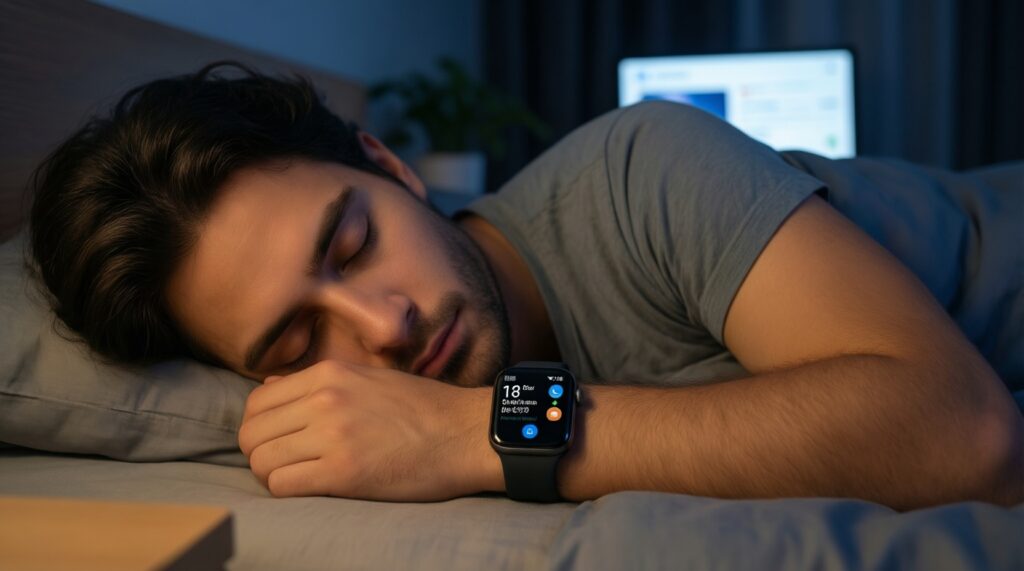
Awakenings, bedtime/wake consistency, and easy long-term trends are the most actionable. If you're comparing สมาร์ตวอทช์ติดตามการนอน ยี่ห้อไหนดี, comfort at night is a deciding factor.