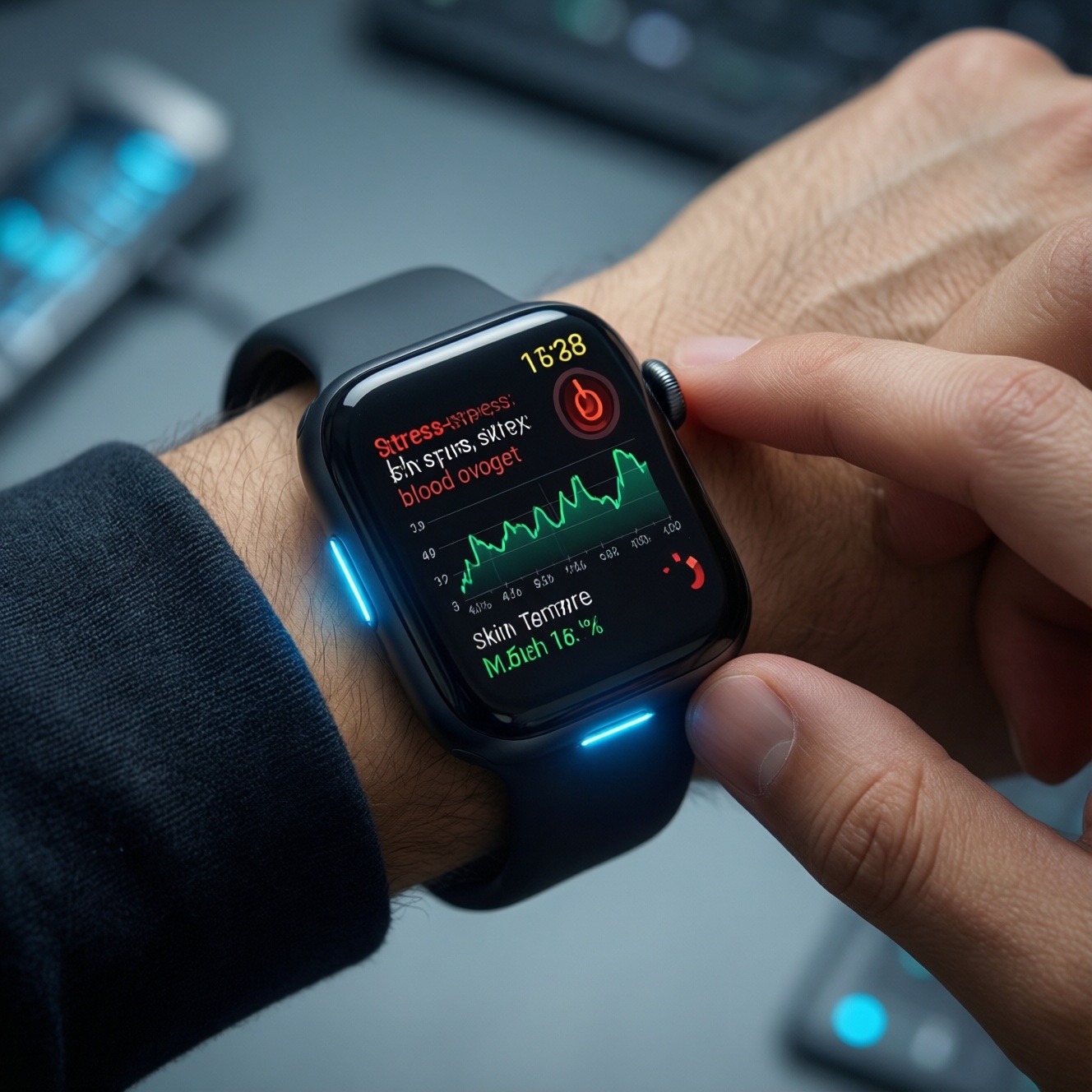
For reliable stress, SpO₂, and temperature-related tracking in a wearable, prioritize sensor quality (PPG LEDs, skin-temp sensor), measurement conditions (fit, motion, skin tone, ambient temperature), and software transparency (raw trends, tags, calibration prompts). Budget devices can be trustworthy for trends, while premium models are worth it when you need tighter consistency, better motion handling, and stronger app ecosystems.
Quick Reliability Snapshot
- Stress on wearables is usually HRV-based, so it is best used for trends and recovery patterns, not as a diagnostic.
- SpO₂ can be credible when you measure at rest, with a snug fit, and you repeat readings; spot checks are more dependable than all-day charts.
- "Body temperature" on most watches is skin temperature; it's most useful overnight for deviation from your personal baseline.
- Budget-first strategy: pick a watch with decent PPG + solid app insights, then validate against a fingertip oximeter and your own repeated routine.
- Premium is justified if you need better motion filtering, cleaner nighttime signals, and longer-term data quality with fewer gaps.
How These Wearables Measure Stress, SpO₂ and Skin/Body Temperature
When people ask อุปกรณ์วัดความเครียดแบบสวมใส่ รุ่นไหนดี, the best answer depends on whether you want reliable daily patterns (budget-friendly) or more consistent night/recovery analytics (often premium). Use these criteria to compare models and ecosystems before price.
- Stress method transparency: does the app explain HRV/heart-rate inputs and show context (sleep, activity, caffeine tags)?
- SpO₂ mode quality: supports spot checks, guided measurement at rest, and clear "low confidence" flags when motion is high.
- Temperature sensing type: skin temperature sensor vs "estimated body temp"; baseline/deviation view is more useful than single values.
- Fit and strap options: multiple sizes/materials; stable contact matters more than brand.
- Motion handling: workouts and commuting are where many devices produce noisy stress/SpO₂.
- Sampling controls: ability to choose continuous vs periodic tracking (and what it costs in battery).
- Data review: raw charts, annotations, and export options; avoid "one score only" dashboards.
- Update policy: frequent firmware updates and consistent app maintenance.
- Cross-device validation: easy to compare to a finger pulse oximeter and a thermometer routine (for trend validation).
| Measurement | What it actually measures | Best use | Common failure mode |
|---|---|---|---|
| Stress | HRV/heart-rate patterns (PPG-based) | Recovery, workload balance, trend tracking | Inflated stress during motion, poor fit, stimulants |
| SpO₂ | Blood oxygen saturation estimate (red/IR PPG) | Resting spot checks, sleep trend hints | Motion, cold hands, loose strap, ambient light leaks |
| Skin/Body temperature | Skin temperature (often wrist); sometimes deviation from baseline | Overnight baseline deviation, illness/recovery context | Room temperature changes, wearing style, daytime variability |
Sensor Types and Factors That Affect Accuracy
For สมาร์ทวอทช์วัด SpO2 ยี่ห้อไหนดี and สมาร์ทวอทช์วัดอุณหภูมิร่างกาย รุ่นไหนดี, focus less on marketing labels and more on sensor stack + algorithms. Below are practical "variants" you'll actually encounter, from budget bands to premium ecosystems, and when each is the right choice.
| Variant | Who it fits | Pros | Cons | When to choose |
|---|---|---|---|---|
| Budget fitness band (PPG + SpO₂, no temp sensor) | Budget-first users who mainly want trends | Low cost, light, usually decent resting SpO₂ spot checks | Stress scores can be noisy; fewer controls/exports | If you want basic stress/SpO₂ trend tracking and can validate with repeat measurements |
| Budget smartwatch with added algorithms (PPG + SpO₂ + better app) | Intermediate users wanting more insights without premium pricing | Better sleep/recovery views; more charts and tagging | Still limited during high motion; temperature often absent or basic | If you want a budget-friendly "all-in-one" for day-to-day health dashboards |
| Mainstream smartwatch ecosystem (strong app + HR features) | Users who value consistency and integrations | More stable signal processing; better long-term experience | Higher price; some features locked to phone OS | If you want fewer data gaps and better analysis quality across months |
| Smartwatch with dedicated skin temperature sensor | People tracking baseline deviation (sleep/recovery/illness context) | More meaningful temperature trends (baseline deviation) | Not a clinical thermometer; daytime readings easily skewed | If overnight "deviation from baseline" is a priority |
| Sports-focused watch (training/recovery emphasis) | Runners/gym users who care about recovery and workload | Better training context around HRV/stress-like metrics | May have weaker smartwatch features; SpO₂/temperature varies by model | If stress/recovery must make sense in training weeks, not just daily life |
| Ring-type wearable (sleep-first sensing) | People who dislike wrist wear at night | Often strong overnight consistency; comfortable sleep tracking | Less workout utility; no screen; subscriptions possible | If your main goal is night stress/recovery and temperature deviation tracking |
- Fit is accuracy: a stable, snug strap usually improves stress and SpO₂ more than upgrading one tier.
- Motion is the enemy: treat stress/SpO₂ during commuting, chores, and workouts as "low confidence" unless the device explicitly handles it well.
- Temperature is contextual: prioritize baseline deviation views (especially overnight) over single "temperature values."
Real-World Performance: Independent Tests and Benchmarks
Without quoting specific labs here, the most useful "independent testing" approach for wearables is repeatability: compare multiple readings under the same conditions, check consistency overnight, and cross-check occasional spot measurements against a simple fingertip oximeter and a standard thermometer. This is the practical way to do เปรียบเทียบสมาร์ทวอทช์สุขภาพ วัดความเครียด SpO2 อุณหภูมิ for your own body and routine.
| Scenario | Budget-first recommendation | When premium is worth it | How to benchmark at home |
|---|---|---|---|
| If you mainly want resting SpO₂ spot checks | Budget band/smartwatch with guided SpO₂ and good fit options | If you need fewer failed readings and clearer confidence flags | Measure seated, warm hands, 2-3 repeats; compare to fingertip oximeter trends |
| If "stress" should reflect recovery, not daily chaos | Pick devices with strong sleep views and manual tags | If you want steadier overnight HRV signals and fewer gaps | Compare stress/HRV trend on nights with consistent sleep/wake times |
| If you want temperature insights for illness/recovery context | Only consider budget models that show baseline deviation (not just a number) | If you want more consistent overnight skin-temp deviation tracking | Keep bedroom conditions stable; track deviation across several nights |
| If you do frequent workouts and still want clean health metrics | Accept that budget devices may be "good enough" for post-workout trends | Worth it if you need better motion filtering and fewer artifacts | Compare workouts of similar intensity; look for stable post-exercise recovery patterns |
- If your priority is price-to-trust, choose a budget device, then validate by repeating measurements at rest and focusing on trends.
- If you see frequent gaps or wildly changing stress scores, upgrade fit/strap first; upgrade device second.
- If you need temperature for baseline deviation, pick a model with a real skin temperature sensor and overnight baseline view.
- If you want reliability during motion, premium ecosystems and sports-focused watches are more likely to justify the extra spend.
Battery Life, Sampling Strategy and Data Processing Trade-offs
Battery is not just convenience; it determines how often sensors sample and how aggressive algorithms become about filtering noise. Many "accurate" experiences come from sensible sampling (especially at night) rather than always-on everything.
| Setting choice | Impact on reliability | Impact on battery | Best practice |
|---|---|---|---|
| Continuous SpO₂ | More data, not always better quality | Higher drain | Prefer scheduled/night-only or spot checks unless you have a reason |
| High-frequency HR/HRV sampling | Can improve trend resolution if signal is clean | Medium to high drain | Prioritize during sleep; keep daytime reasonable |
| Temperature tracking | Best overnight; daytime is noisy | Usually moderate drain | Use baseline deviation views and consistent sleep routine |
- Decide your primary metric: stress/recovery, SpO₂ spot checks, or temperature deviation.
- Turn on night-focused sampling first (sleep is the cleanest signal window).
- Use SpO₂ as spot checks unless you specifically need sleep trend hints.
- Enable tags/notes (workout, alcohol, late meal, travel) so stress data becomes interpretable.
- Pick a battery target: short (daily charge) vs medium vs long; then match features to it.
- After 7-14 days, review for data gaps; if gaps persist, reduce features or consider upgrading hardware.
Budget-Friendly Models with the Best Trustworthiness
If you're searching for สมาร์ทวอทช์สุขภาพ แม่นยำ เชื่อถือได้ ราคา, the most common failure is overpaying for features you can't measure well (because of fit, routine, or unrealistic expectations). Budget devices can be the best choice when you commit to repeatable measurement habits.
| Mistake | What happens | Budget-safe fix | When paying more helps |
|---|---|---|---|
| Expecting "stress" to match feelings minute-by-minute | Frustration; misinterpretation | Track weekly patterns + sleep context | If you want deeper recovery analytics and coaching |
| Measuring SpO₂ while walking or talking | Erratic readings | Seated, warm hands, snug strap, repeat reading | If you need fewer failed readings in daily life |
| Buying "temperature" without baseline deviation | Numbers that don't guide decisions | Choose models that show deviation from your baseline | If you want stronger overnight temperature insights |
| Ignoring strap fit and wrist placement | Noise in HRV/stress and SpO₂ | Change strap; wear higher on wrist during measurement | Premium helps, but fit still matters |
| Turning on every continuous feature immediately | Battery drain; more artifacts | Start with sleep + spot checks, then expand | Premium helps if you want more always-on tracking |
| Comparing brands by "one score" rankings | Wrong conclusions | Compare raw charts and consistency under the same routine | Premium apps often explain data better |
- Don't choose by sensor list alone; choose by how the app lets you validate and interpret readings.
- Prioritize overnight consistency for stress/recovery and temperature deviation.
- For SpO₂, treat wearables as repeatable trend tools and keep a simple validation routine.
- If you must cut cost, cut "always-on" features first-not fit/comfort.
- When premium is justified: you want fewer gaps, better motion handling, and a stronger ecosystem for long-term tracking.
Privacy, Connectivity and Long-Term Calibration Issues
Best overall for budget-first users is a mainstream budget smartwatch/band that supports reliable spot SpO₂, clear sleep-based stress trends, and good data review; best for temperature-focused tracking is a device that explicitly provides overnight baseline deviation via a skin temperature sensor. Best for training-heavy users is a sports-oriented watch; best for ecosystem convenience is the smartwatch that matches your phone and privacy preferences.
User Concerns and Practical Answers
Can a wearable truly measure "stress" accurately?
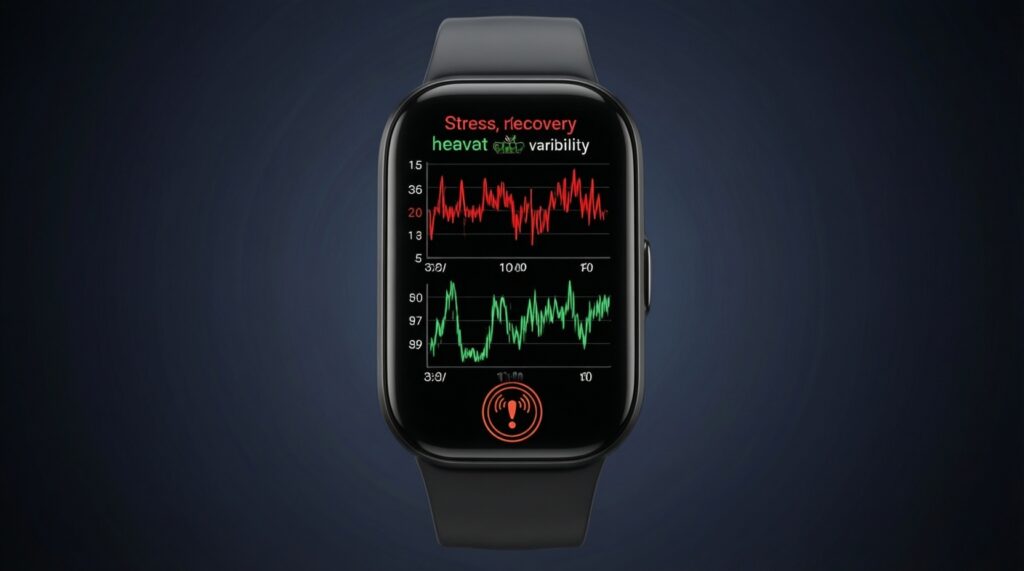
It estimates stress from HRV/heart-rate patterns, so it's most reliable for trends and recovery context. Treat sudden spikes during motion or poor sleep as "signal quality" issues first.
Which is more reliable: continuous SpO₂ or spot checks?
Spot checks at rest are usually more dependable because motion and fit errors are easier to control. Use continuous/night tracking mainly for trend hints, not single-point decisions.
Does "body temperature" on a smartwatch equal a thermometer reading?
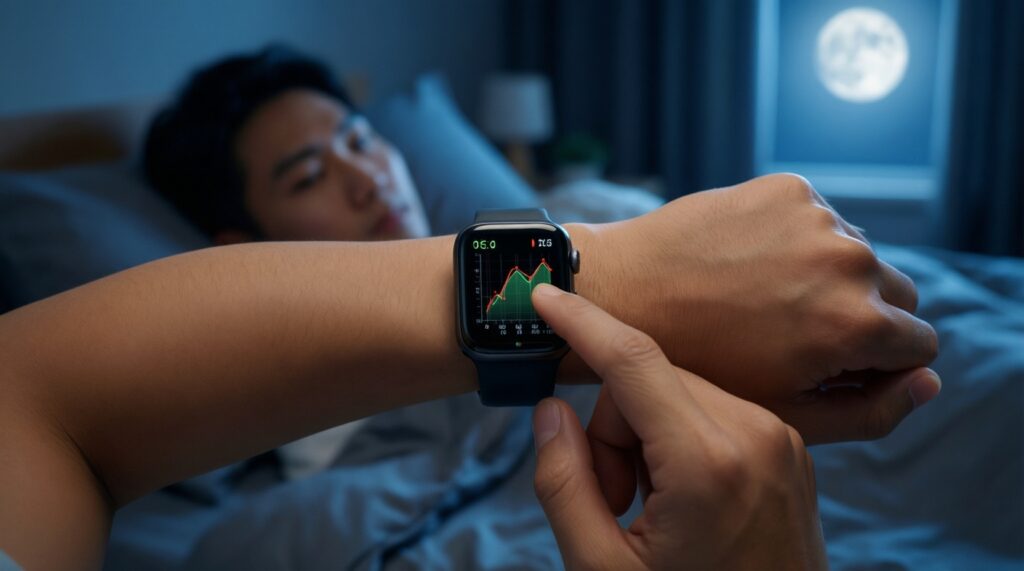
Usually no-it's skin temperature and is heavily influenced by environment. The practical value is overnight deviation from your personal baseline.
How do I validate my watch's SpO₂ at home?
Repeat seated measurements with warm hands and a snug strap, then compare the pattern to a fingertip oximeter across several sessions. Focus on consistency and trends, not perfect matching.
What's the single biggest upgrade for better readings without buying a new device?
Fit and measurement routine: correct strap tightness, stable wrist placement, and measuring at rest. These changes often reduce noise more than switching brands.
When is it worth paying for a premium model?
When you consistently see data gaps, noisy stress readings despite good fit, or you need better motion handling and long-term analytics. Premium is also attractive if you want tighter ecosystem integration and longer software support.