

In Thailand, the mid-range vs flagship price gap mainly buys sustained performance under heat, better cameras in difficult light, brighter and more accurate displays, higher-end materials and protection, and longer software support. Choose flagship if you stress the phone (gaming, video, travel photos); choose mid-range if you upgrade often and want strong value.
What the Price Gap Actually Buys
- More stable performance over long sessions (less throttling) and stronger GPU headroom for games.
- Better camera "hit rate" in low light, motion, and high-contrast scenes, plus more consistent video.
- Higher peak brightness and more reliable HDR viewing outdoors and in mixed lighting.
- Premium build details: stronger glass, tighter tolerances, better water resistance, and improved haptics/speakers.
- Longer and faster software support cycles, plus ecosystem extras (continuity features, device tracking, trade-in value).
Performance: Real-world CPU, GPU and Thermal Differences
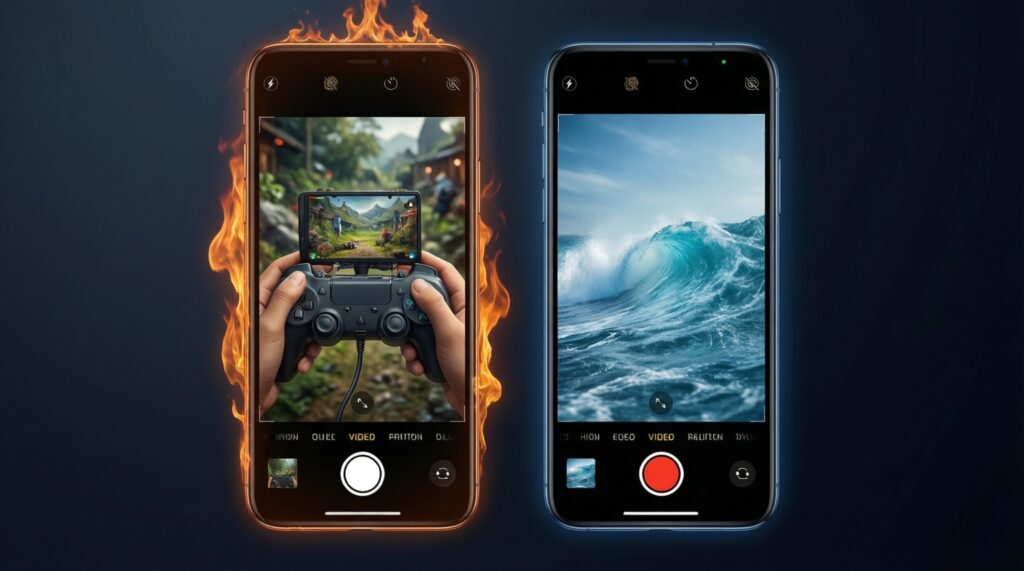
If you're doing a เปรียบเทียบมือถือระดับกลางกับเรือธง for daily speed, both can feel "fast" in short bursts. The practical difference shows up when heat builds: long gaming, navigation + camera, 4K video, multitasking with picture-in-picture, or spotty signal where the modem works harder.
How to judge performance in ways you'll actually feel
- Sustained performance: does it keep the same frame rate after 15-30 minutes, or drop as it warms up?
- GPU headroom: can it run high settings smoothly without stutter in busy scenes?
- Thermal comfort: does the back get uncomfortably warm during gaming/camera use?
- Storage speed consistency: app install speed and camera burst handling over time (especially when storage is near full).
- RAM management: does it keep apps alive, or reload often when switching between maps, chat, browser, and camera?
- Modem efficiency: stable performance when signal is weak (mall parking, BTS/MRT tunnels, rural areas).
- Game-specific tuning: vendor game modes, touch sampling stability, and heat limits that cap performance.
| What you compare | Typical mid-range outcome | Typical flagship outcome | When it matters most |
|---|---|---|---|
| Long gaming session | May reduce frame rate as heat builds | Holds higher frame rate longer due to more thermal headroom | MOBA/FPS, high refresh displays |
| Heavy multitasking | More frequent app reloads depending on RAM/storage | More consistent app retention and smoother switching | Maps + chat + camera + browser |
| Camera processing | Slower HDR/night processing, more waiting between shots | Faster processing and better "shot-to-shot" speed | Kids/pets, street photography |
| Price delta (Thailand market) | Lower upfront cost | Higher upfront cost; often offset by resale/trade-in for some brands | Buy-and-keep vs frequent upgrades |
Persona fit: performance
- Tech enthusiast / gamer: lean flagship if you care about stable FPS, cooler feel, and peak GPU headroom. If you're asking มือถือเรือธงรุ่นไหนดี, prioritize sustained performance and thermal behavior over peak benchmark claims.
- Pragmatic everyday user: a good mid-range can feel identical for messaging, banking, social, and casual photos-focus on RAM/storage tier and modem reputation when deciding มือถือระดับกลางรุ่นไหนดี.
- Budget-seeker: pick mid-range and spend time comparing real battery life, update policy, and after-sales support; don't pay flagship pricing if your heaviest task is short camera bursts and social apps.
Build, Materials and Durability: Plastic vs Metal and Glass
Build quality is where the flagship premium becomes "physical": frame stiffness, better glass, tighter sealing, stronger vibration motor, and more consistent buttons. Mid-range devices can still be durable, but often trade premium feel and sealing for cost and lighter weight.
Use the variants below as a checklist when you handle phones in-store. Try: one-hand grip, button wobble, speaker balance, and whether the camera bump makes it rock on a table.
| Variant | Who it fits | Pros | Cons | When to choose |
|---|---|---|---|---|
| Plastic back + plastic frame (mid-range typical) | Value-focused users, students, frequent upgraders | Lightweight; less shatter risk on the back; repairs can be cheaper | Feels less premium; can creak; less effective heat spreading | You use a case anyway and want maximum value per baht |
| Plastic back + metal frame (upper mid-range) | Pragmatic buyers wanting sturdier feel without flagship cost | Better rigidity; improved button feel; nicer in-hand balance | Still not "premium glass"; can show frame scratches | You want a durable daily phone for 2-3 years |
| Glass back + metal frame (flagship common) | Users who care about feel, wireless charging, resale | Premium feel; better fit/finish; often better water resistance tiers | Back can crack; heavier; more slippery without a case | You want a premium device and plan to resell or trade-in later |
| Matte/soft-touch back (varies across tiers) | People who hate fingerprints and want secure grip | Less smudging; more grip; looks cleaner in daily use | Coatings can wear; color can polish over time | You use the phone caseless or with a thin case |
| Ruggedized build (some mid-range / specialty models) | Outdoor, construction, delivery riders | Impact tolerance; practical durability; often loud speakers | Bulky; cameras/displays may be average for the price | Your priority is survival, not thinness or camera finesse |
| Foldable/ultra-thin premium designs (flagship niche) | Early adopters, multitaskers, productivity users | Unique form factor; large screen experience | Higher repair risk/cost; durability depends heavily on use | You truly benefit from the form factor, not just novelty |
Cameras: Sensor Size, Optics and Computational Photography Trade-offs
Camera differences are rarely about megapixels. Flagships typically win with larger sensors, better lenses, stronger stabilization, and more reliable computational processing-especially when light is low or subjects move. Mid-range phones can still deliver excellent daylight photos, but results vary more by scene.
- If you shoot indoors or at night, choose flagship for cleaner shadows, fewer motion artifacts, and more consistent skin tones.
- If you photograph kids, pets, or street action, choose flagship for faster capture, better autofocus tracking, and fewer blurred frames.
- If you mostly shoot daylight travel/food, a strong mid-range is often enough-prioritize good HDR behavior and natural colors over extra lenses.
- If you care about video (concerts, vlogs, moving shots), lean flagship for stabilization, exposure transitions, and fewer focus "pumps."
- If you rely on 2×-5× zoom, pick a model with a real telephoto lens (often flagship), not just digital crop.
Practical buying tip for Thailand shoppers: when comparing camera samples, look for consistency across 10-20 shots, not a single "best" frame. Flagships typically deliver a higher success rate without retakes.
Displays: Brightness, Color Accuracy, HDR and Refresh Rate
Displays can look similar in a shop but behave differently outdoors and at low brightness. Use this quick selection flow before you decide whether the flagship premium is worth it.
- Outdoor use: if you frequently use maps, delivery apps, or camera outdoors, prioritize higher peak brightness and good anti-reflection behavior.
- Night comfort: check low-brightness uniformity (no tint shifts) and whether dimming causes flicker sensitivity for you.
- HDR viewing: if you stream a lot, confirm HDR support is meaningful (not just a logo) and that highlights stay visible without crushing blacks.
- Refresh rate: choose higher refresh if you scroll a lot or game; prefer adaptive refresh if you want better battery balance.
- Touch stability: test fast typing and quick swipes; some mid-range panels feel less consistent when warm or charging.
- Color intent: if you edit photos, prefer displays with reliable color modes (natural/sRGB-like) rather than only vivid tuning.
Battery, Charging and Longevity: Capacity, Fast Charge and Degradation
Battery decisions often go wrong because buyers overfocus on peak charging watts or the biggest mAh number. What matters is your daily drain pattern, heat exposure, and how the phone manages charging over months.
- Assuming higher mAh always wins; display brightness, modem efficiency, and chipset tuning can matter more.
- Ignoring heat: frequent hot charging (car dashboards, gaming while charging) accelerates battery wear.
- Buying the fastest charging you can find without checking whether the phone throttles under heat or requires a proprietary charger.
- Not checking "battery protection" features (charge limit, adaptive charging) that reduce long-term degradation.
- Overpaying for flagship battery life if your main drains are social apps and Wi‑Fi use; a good mid-range can match the feel.
- Underestimating 5G drain in weak coverage; mid-range modems can be less efficient in challenging signal areas.
- Choosing ultra-thin designs if you want consistently cool charging; thin phones tend to shed heat less comfortably.
- Forgetting accessory costs: if you chase โปรโมชั่นมือถือเรือธง, verify what's included (charger, cable) so your "deal" isn't offset later.
Software, Updates and Ecosystem Perks: Features, Support and Value-added Services
For buyers prioritizing stability, camera consistency, and longer support, a flagship is usually the better fit; for buyers prioritizing value and frequent upgrades, a well-chosen mid-range is usually the better fit. If you're tracking มือถือเรือธงราคาล่าสุด, weigh trade-in/resale and update policy alongside specs, because those often decide long-term value more than small hardware differences.
Common Buyer Concerns Answered
Will a mid-range phone feel slow after a year?
It depends more on RAM/storage tier and software support than the label "mid-range." Choose enough RAM for your multitasking style and keep storage from running near full.
Is flagship only worth it for gaming?
No. Flagships also help if you shoot lots of indoor photos/video, need brighter outdoor viewing, or want stronger build and support longevity.
How do I decide between "มือถือเรือธงรุ่นไหนดี" models without chasing specs?
Compare sustained performance (not peak), camera consistency in low light, and update policy. Then choose the one that matches your usage: gaming, video, or travel photos.
How do I decide "มือถือระดับกลางรุ่นไหนดี" if I don't want regrets?
Prioritize a strong main camera, proven battery behavior, and a solid update track record. Avoid paying extra for weak secondary lenses you won't use.
Are flagship promotions always a good deal?
Not always. With โปรโมชั่นมือถือเรือธง, verify total cost: included charger, warranty terms, and the plan/contract conditions if bundled.
Should I wait for the newest release or buy now?

If you need the phone now, buy based on today's price and support window. If you're purely price-driven, waiting can help when last-gen flagships discount-but don't assume the lowest price appears immediately.
Is water resistance a must?
It's valuable for accidents, but it's not a license to submerge a phone. If you're often in rain or near water, stronger sealing can justify paying more.